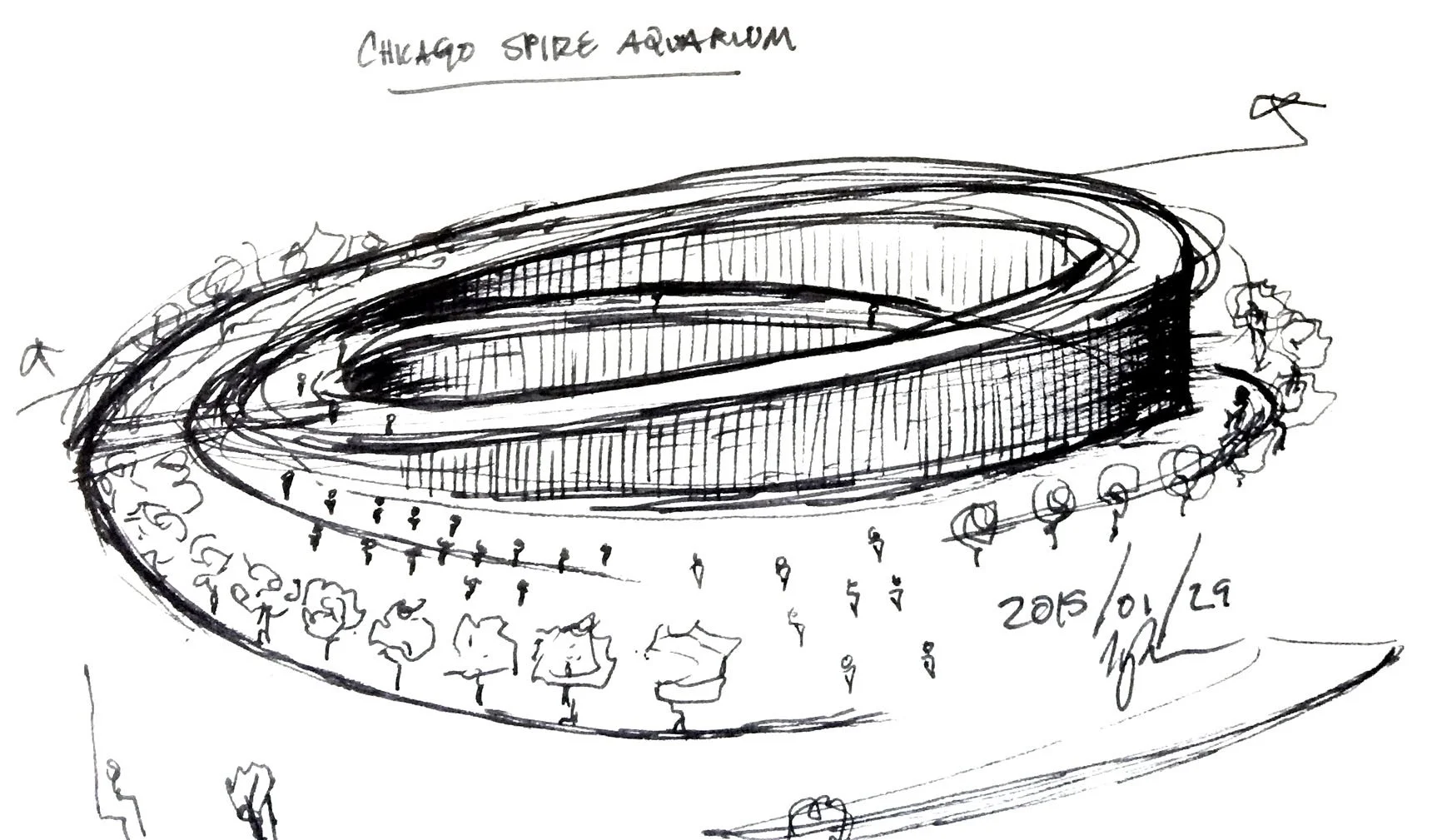
CHIcAGO SPIRE AQUARIUM
2015
Chicago, Illinois
Competition
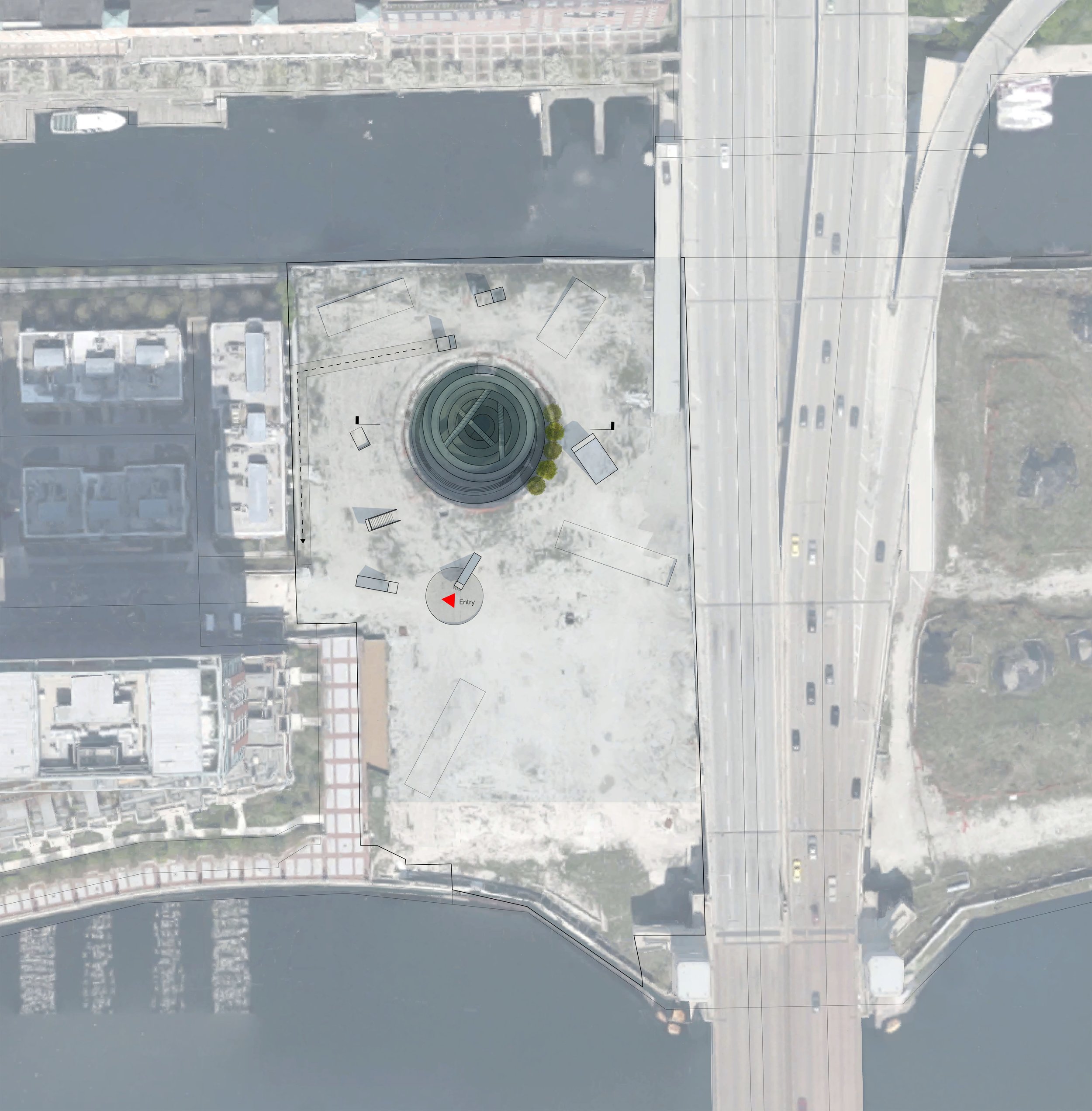
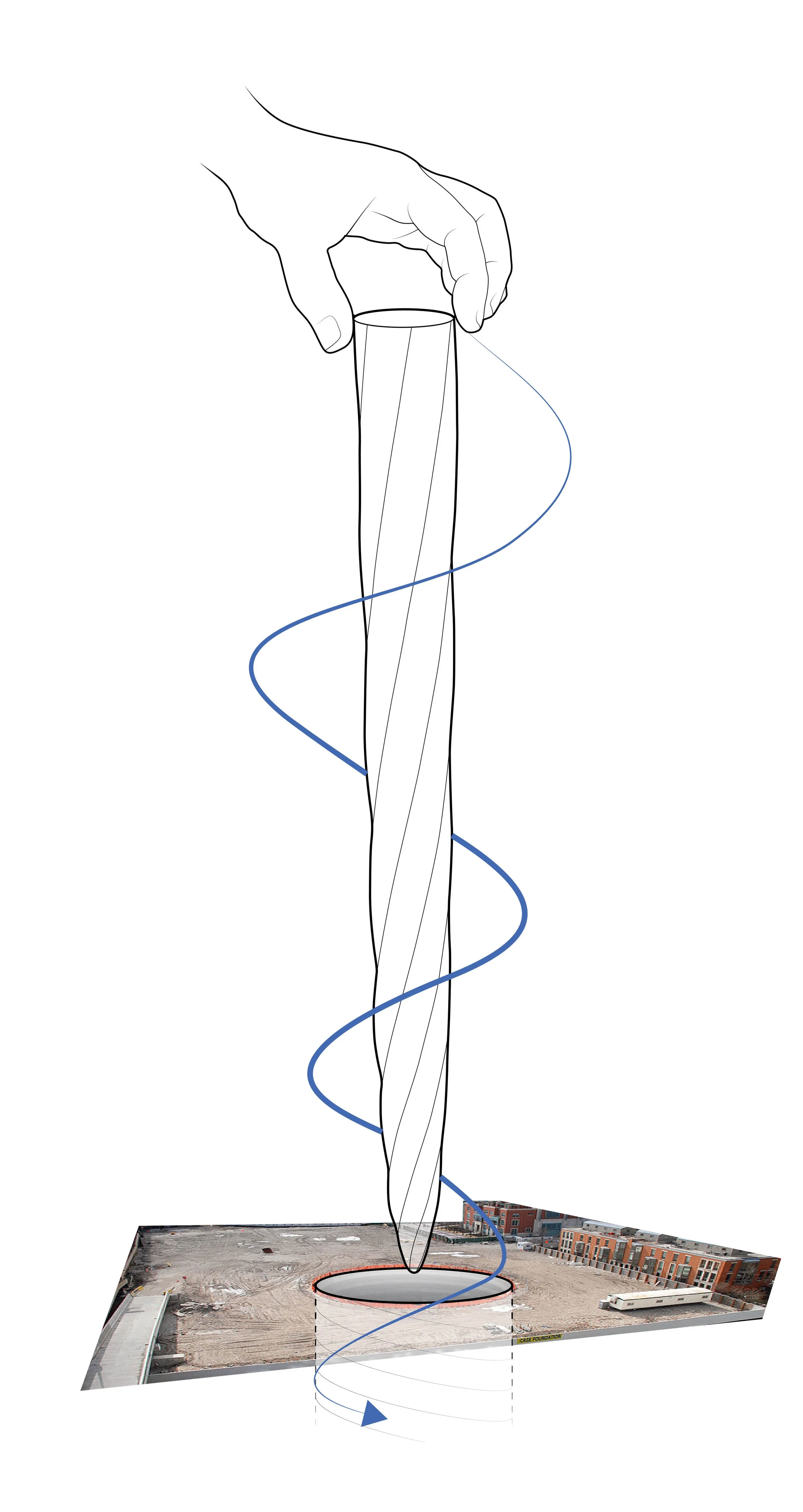
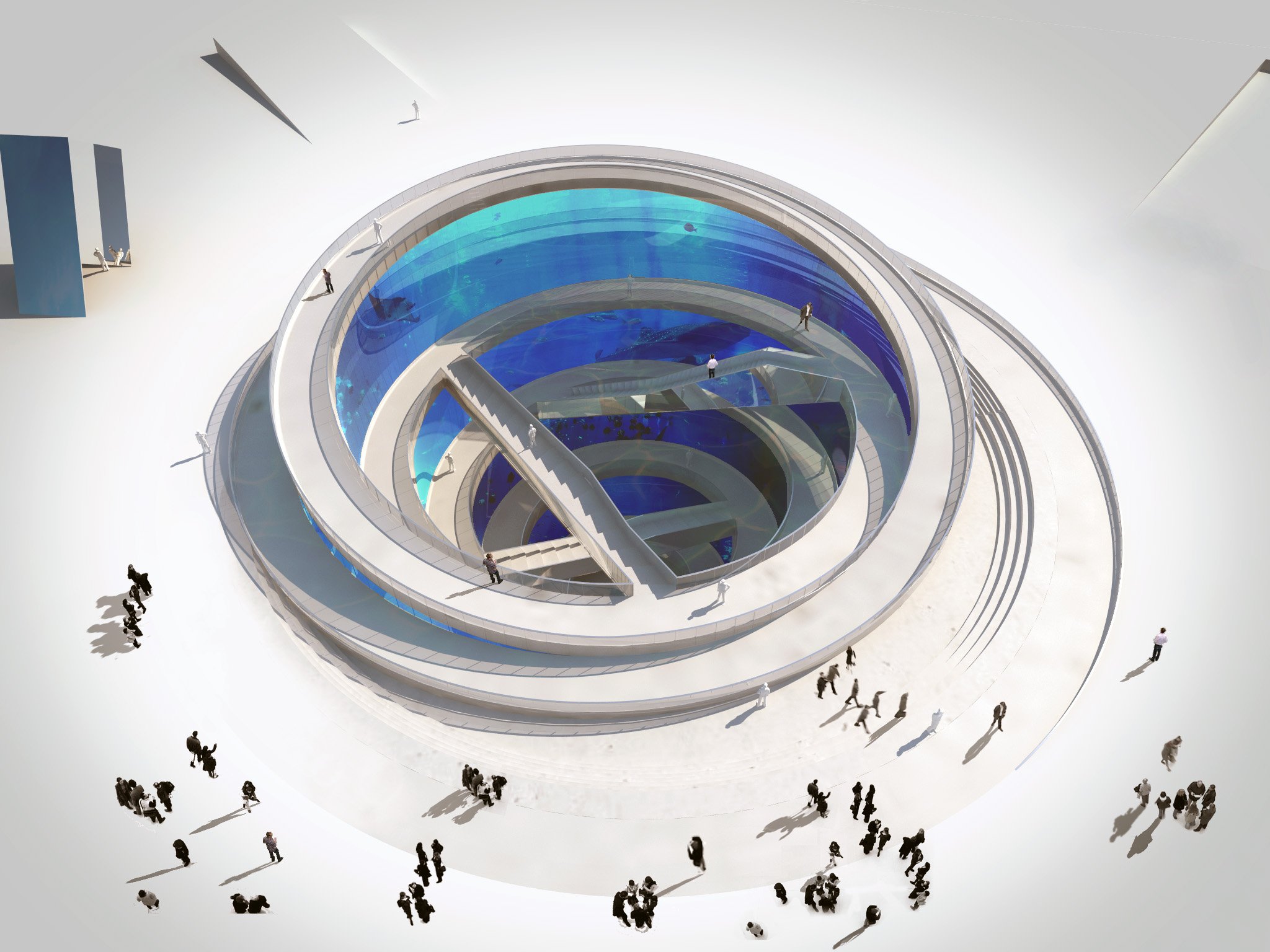
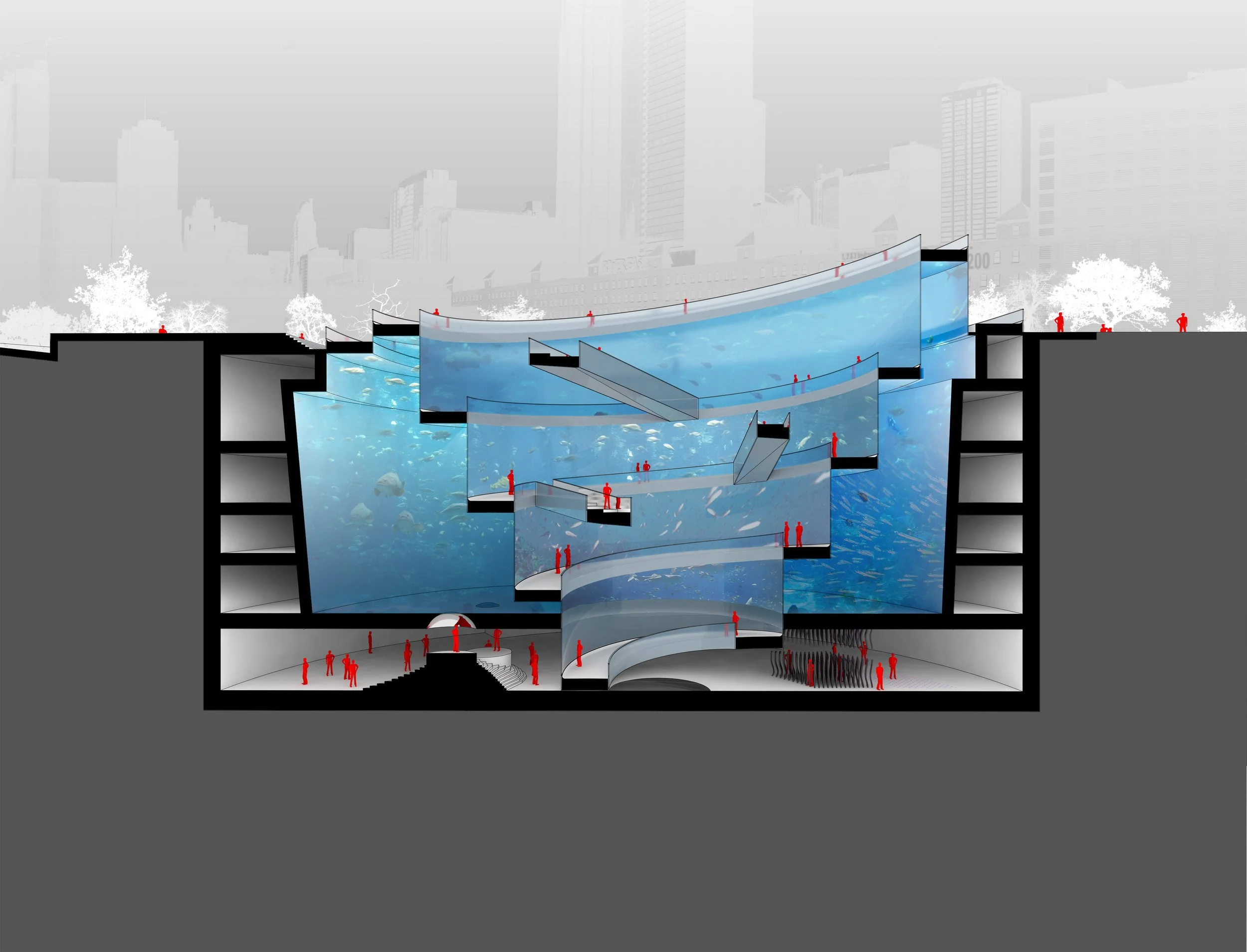
The Chicago Spire Aquarium proposes a new public institution for Chicago's Museum Campus — an aquarium embedded within the abandoned excavation pit of Santiago Calatrava's unbuilt Chicago Spire. Rather than erasure, the project treats the dig as a found condition: a below-grade void that becomes the spatial premise for an entirely new typology of aquatic experience.
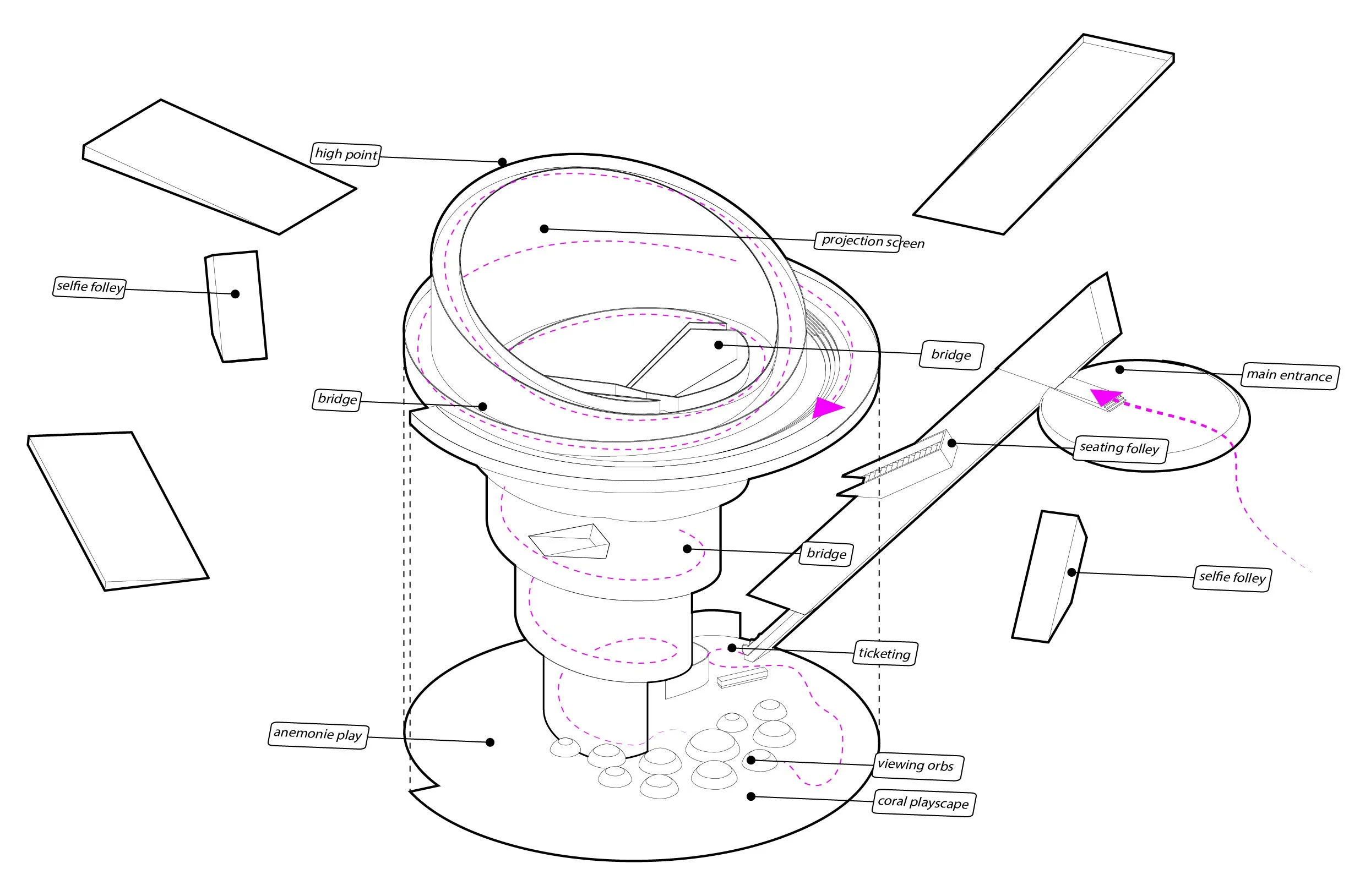
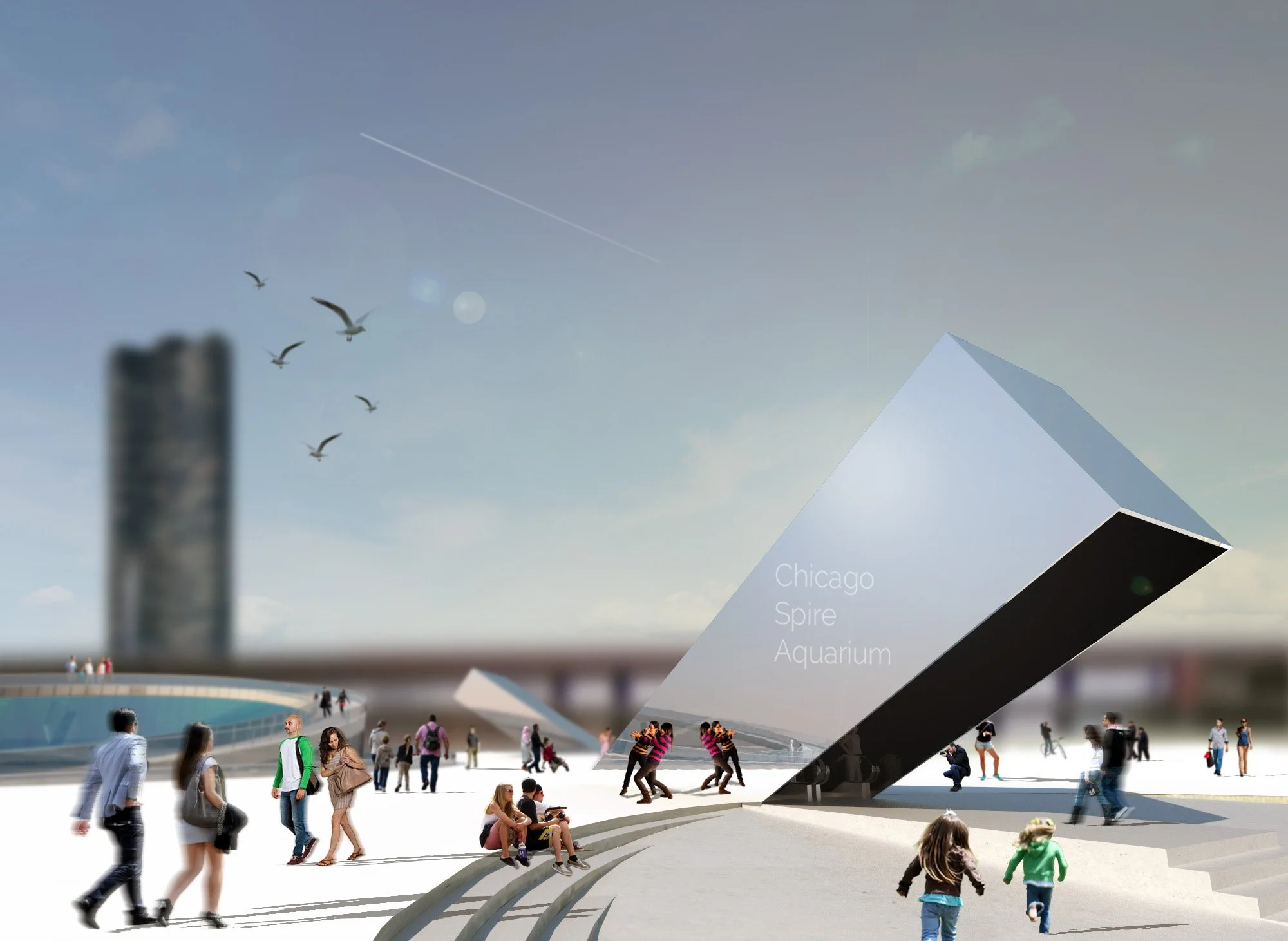
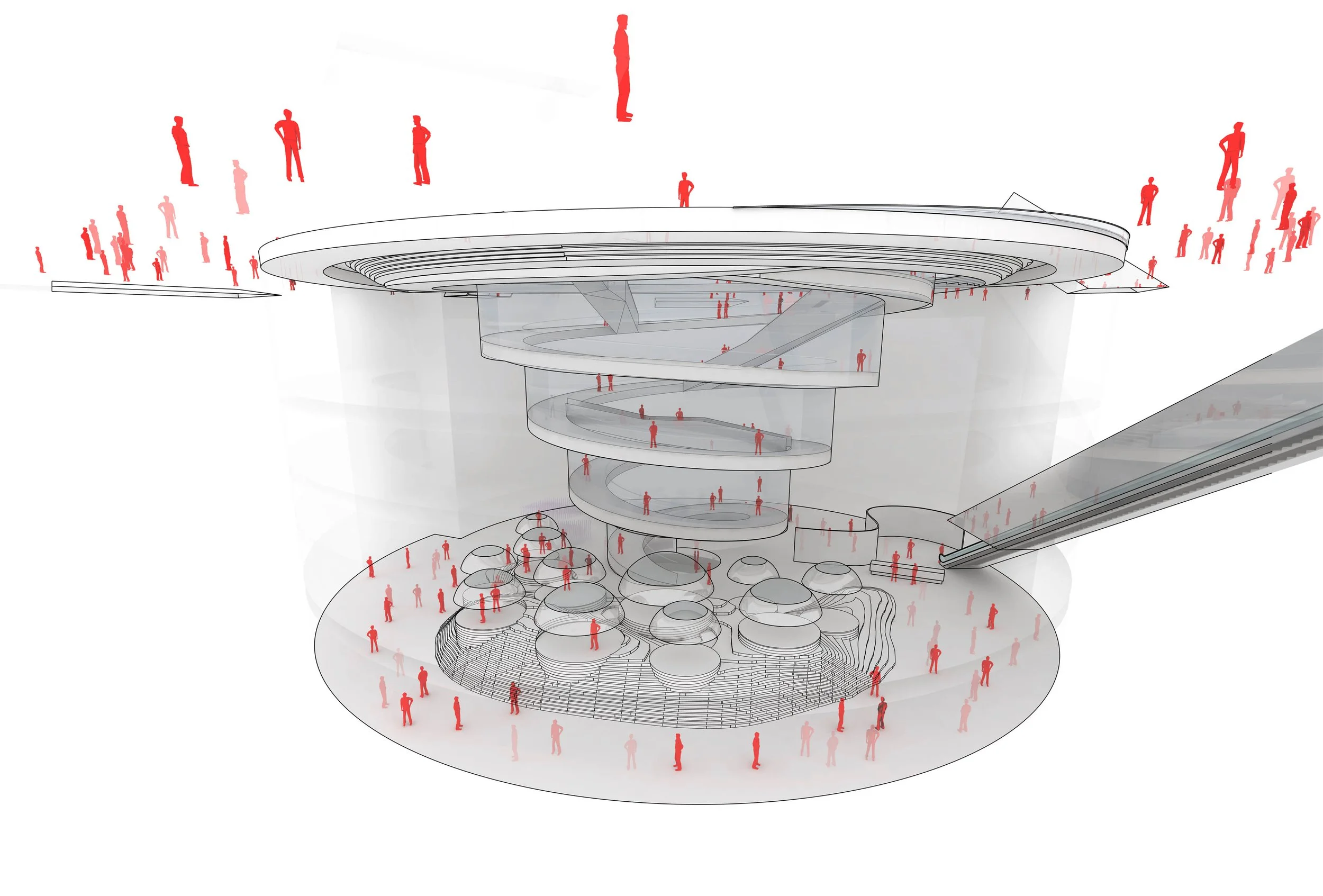
The proposal inverts the conventional aquarium sequence. Where most aquariums move visitors horizontally through contained tanks, this project moves them vertically through continuous water. Entry begins at grade through a mirrored folly plaza, where visitors descend into the basement level. Here they encounter the Coral Playscape — an active, climbable environment where sea life is viewed from below through glass orbs set into the floor, reversing the typical human-to-fish power dynamic and encouraging physical engagement with the exhibit.
From the basement, a spiraling circulation path ascends toward the surface, taking visitors through successive depths of water and light. The journey mimics the experience of ascending through a natural marine environment — from the dense, pressured deep to the luminous, oxygen-rich shallows. As visitors climb, light intensifies and the city gradually reappears. The ascent is deliberately experiential: the architecture is designed to produce a specific emotional arc, from immersion to elation, anchored in the phenomenology of light and verticosity.
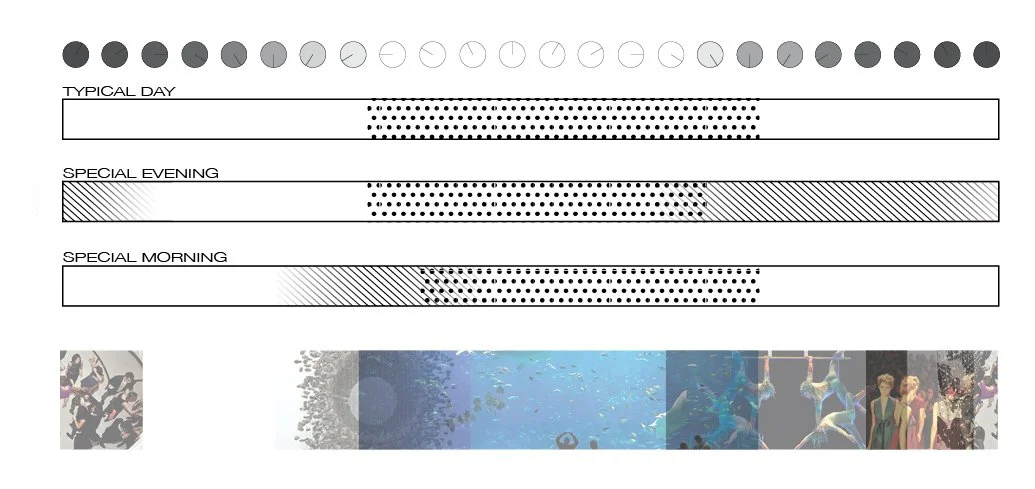
At the surface, a series of mirrored bridges cross the water above. Their reflections dissolve the spatial boundary between the installation and the surrounding lake, producing an infinite horizon effect. During special programming hours — fashion shows, gallery openings, evening events — the bridges convert to stepped seating, transforming the aquarium into a venue space. Above the water line, visitors emerge to a raised plaza with views across the lakefront and back down through the water column they have just traversed.
The landscape is punctuated by a series of mirror-clad bar-shaped follies, each assigned a distinct programmatic function: stadium seating, service access to the basement, spatial warp enclosures for visitor play, and scaled vertical elements that function as oversized selfie infrastructure — acknowledging the contemporary reality of how public space is inhabited and documented.
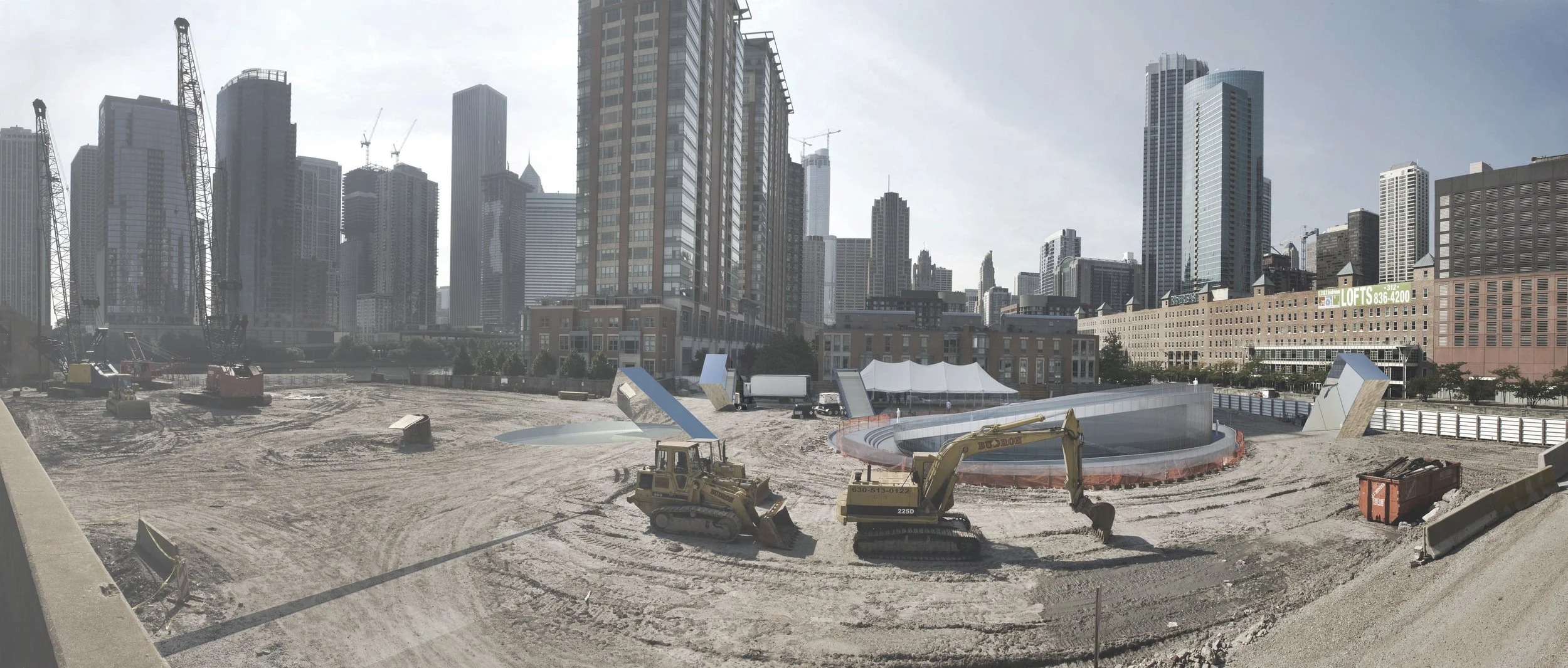
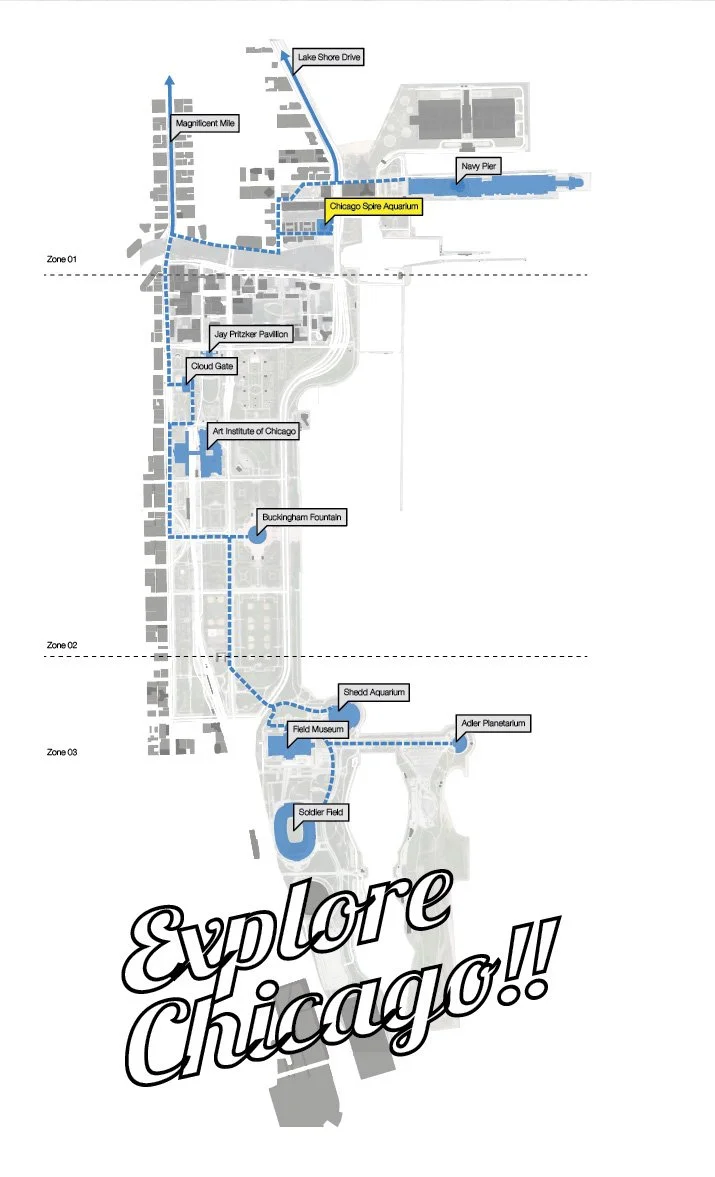
The Museum Campus receives approximately 9 million annual visitors across its institutions. Peak footfall concentrates between 1PM and 4PM, moving from the south end of Grant Park in the morning and progressing northward toward Millennium Park through the afternoon. The proposed aquarium is positioned within this flow, designed to extend dwell time on campus and provide a year-round draw with an after-hours program that the existing institutions do not offer.
Existing campus anchors by annual visitor count: Magnificent Mile (22M), Navy Pier (9.2M), Jay Pritzker Pavilion (7M), Art Institute of Chicago (1.5M), Cloud Gate (4.5M), Field Museum (1M), Shedd Aquarium (2M). The Spire Aquarium is sized and programmed to sit within this hierarchy — complementary to the Shedd, distinct in typology, and positioned as the campus's primary evening destination.