Hold the Rain: Why Bali’s Next Architectural Language Must Begin With Water
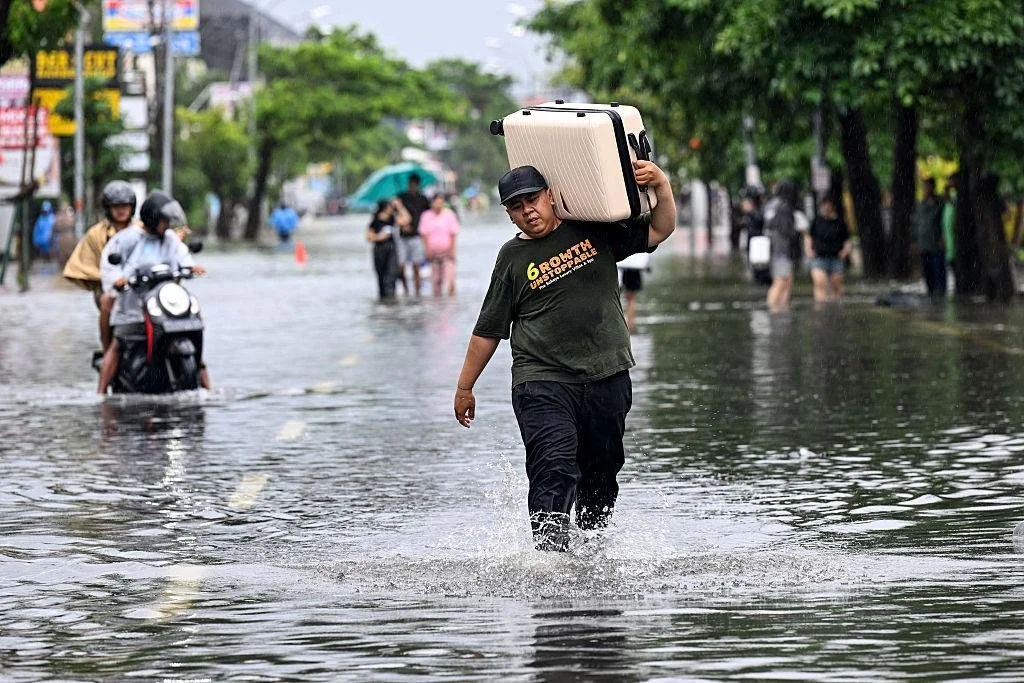
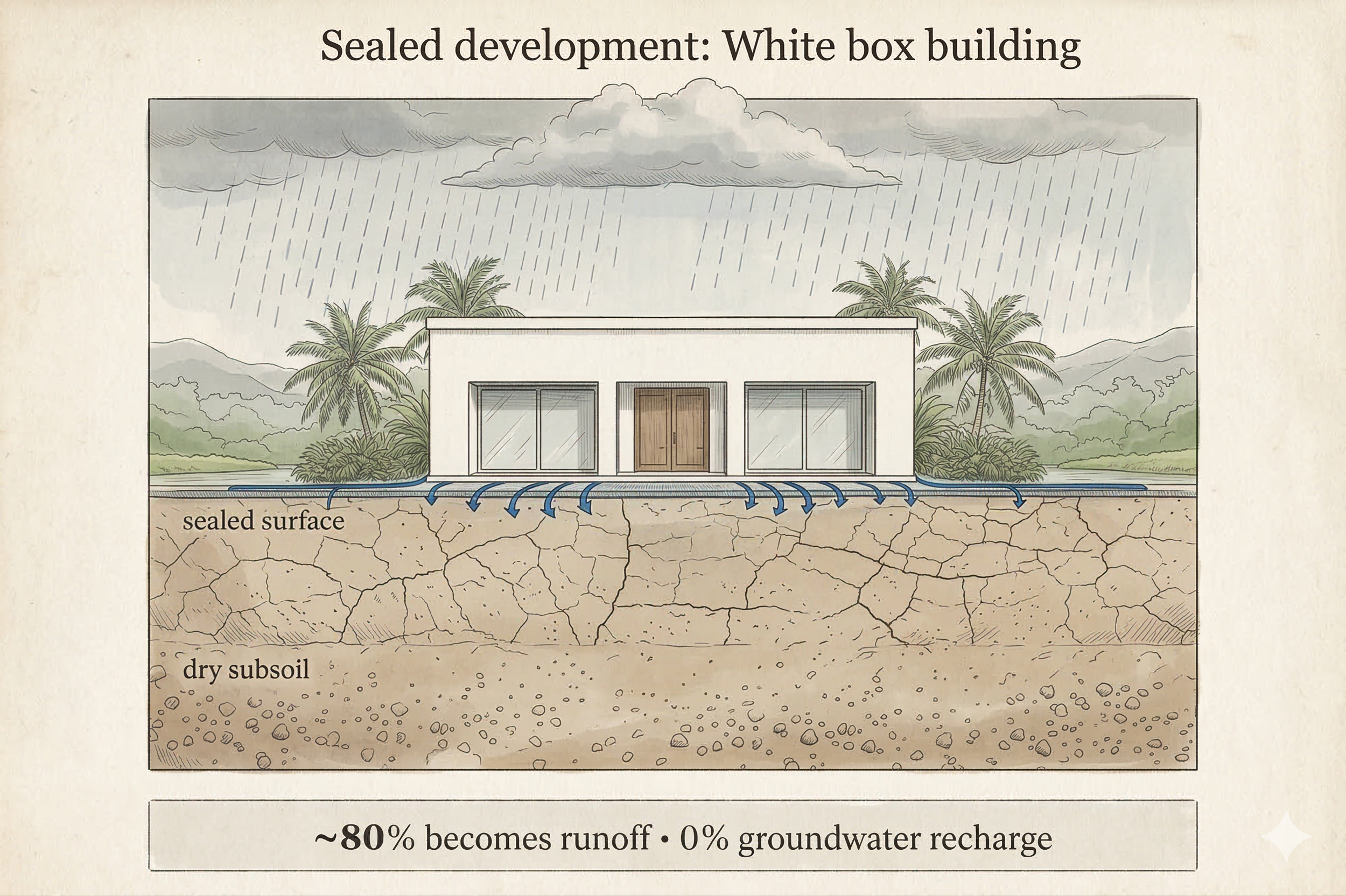
There is a moment during heavy rain in Kerobokan when the street and the drain become the same thing. Water moves across sealed courtyards, across parking areas, across the rooftops of villas and coffee shops, and has nowhere to go but sideways. It finds the road. The road finds the next road. Within twenty minutes a neighborhood built on what was recently rice field is moving water the way a river does — fast, brown, looking for the lowest point.
This is not a failure of rainfall. It is a failure of architecture. Not any single building's failure, but a collective one, accumulated decision by decision across a decade of development that treated water as a nuisance to be discharged rather than a resource to be held.
Bali's flooding is usually blamed on overdevelopment, which is accurate but explains nothing. The more precise problem is this: contemporary buildings in Bali are designed as sealed objects. They receive rain, reject it, and push it onto whatever is adjacent. In a village, that behavior is manageable. In a dense coastal city — which is what Canggu now is, regardless of what its planning documents say — it is a hydrological disaster in slow accumulation. The September 2025 floods killed at least eighteen people, displaced 149 others, and inundated more than 120 locations across seven regencies. The storm delivered 385 millimetres of rain in a single day. But the storm did not build the sealed courtyards, the concrete parking areas, or the rooftops with no retention. That was architecture.
When the Landscape Was Infrastructure
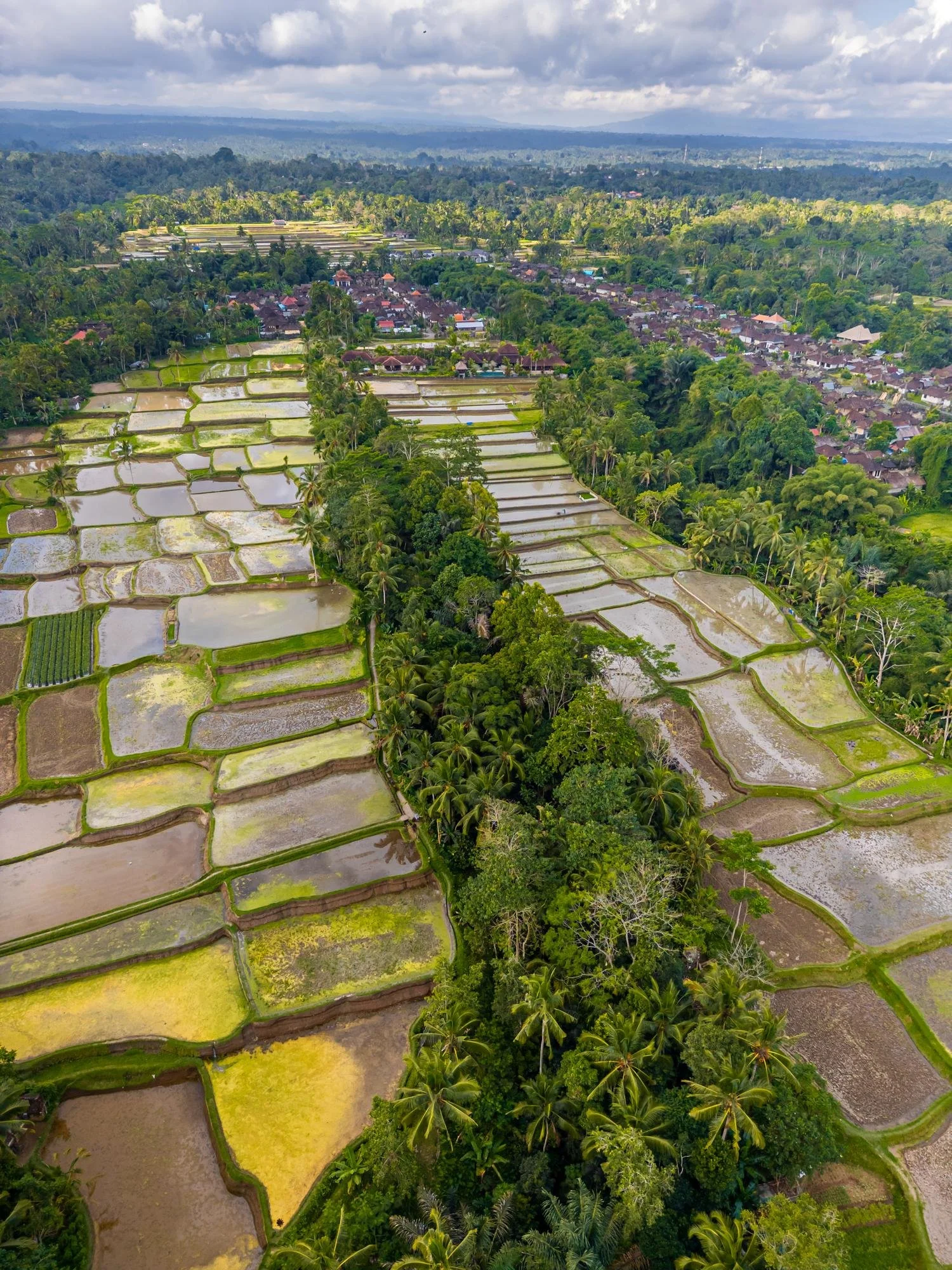
For centuries Bali absorbed its rainfall rather than rejected it. The mechanism was the Subak — a communal water management network dating to the ninth century, covering nearly 19,500 hectares of terraced fields and water temples, recognised by UNESCO in 2012 though the recognition understated what it actually was.
The Subak was not irrigation. It was governance.
Water temples did not exist to manage flow alone. They existed to manage conflict — between upstream and downstream farmers, between competing claims on a shared resource that no individual owned. Communities gathered not only to pray but to negotiate. The cosmological framing of Tri Hita Karana, the harmony between spiritual world, human society, and nature, was the philosophical infrastructure beneath a very practical system: your agricultural decisions affect your neighbor's water supply, and there is an institution that makes that consequence visible and gives it a forum for resolution.
Rain fell, entered the ground, moved slowly and purposefully through the island, and its passage was collectively managed at every stage. Around 1,000 hectares of that agricultural infrastructure disappear every year, replaced by roofs, roads, and sealed surfaces that do the opposite — they accelerate water rather than absorb it, and externalize the consequences onto whoever is downstream.
The Subak's deeper lesson is not hydraulic. It is institutional. The rice terraces worked not because individual farmers were virtuous but because the system made interdependence legible and gave it structure. Contemporary Bali has the interdependence without the structure. Every sealed courtyard in Canggu affects the flooding risk for the building next door. There is no institution that makes this visible. There is no contemporary equivalent of the water temple meeting.
A System Out of Balance
The island is simultaneously running dry from below, which sounds paradoxical until you understand the mechanism. Tourism now consumes an estimated 65 percent of Bali's freshwater and has lowered the water table by roughly 60 percent. Star-rated hotels require up to 800 litres of water per room each day. Indonesia's Environmental Protection Agency reports that 260 of Bali's 400 rivers have run dry. Lake Buyan has dropped 3.5 metres.
On the Bukit Peninsula the logic becomes almost grotesque. Uluwatu sits on a limestone plateau with almost no rivers and a shallow aquifer that cannot keep pace with what is being asked of it. Infinity pools look out over the Indian Ocean while the wells beneath them run brackish. Properties truck water in from elsewhere on the island. The landscape is flooding and going thirsty at the same time — too much water arriving too fast at the surface, too little remaining in the ground — and the buildings that caused both conditions are architecturally indistinguishable from buildings anywhere else on earth.
Jakarta is where this logic ends. Groundwater extraction combined with poor infiltration has contributed to parts of the city sinking by as much as 30 centimetres per year. Roughly 40 percent of Jakarta now sits below sea level. The Indonesian government is relocating the national capital, partly because of this. The process began with the same incremental decisions Bali is still making — parcel by parcel, individually rational, collectively catastrophic. No one decided to sink Jakarta. It was the accumulation of ten thousand decisions that each made local sense.
There is a second accelerant that rarely enters the architectural debate. Bali produces an estimated 4,200 tonnes of waste each day, less than half of it properly managed. What is not collected finds its way into drainage channels, turning a stormwater management problem into a flash flood. The closure of the Suwung landfill earlier in 2025 led to widespread illegal dumping in waterways, and observers believe it directly worsened the September floods. Any serious architectural response to flooding must account for what is already blocking the drains before a single drop falls.
The Sponge City
There is a concept that appears to offer a solution. Kongjian Yu, a Chinese landscape architect at Peking University, developed what he called the Sponge City in the early 1990s, drawing on ancient Chinese water philosophy and the ecological design principles of Ian McHarg. The premise: rather than fighting water — rushing it away through pipes and concrete channels — cities should behave more like the landscapes they replaced, absorbing rainfall, slowing it, filtering it, storing it, releasing it gradually.
After Beijing's 2012 floods killed 79 people, China made it national policy. More than 250 municipalities have since adopted some version of the model. Rotterdam's Benthemplein Water Square — three sunken basins, dry most of the year, holding 1,700 cubic metres of stormwater when it rains — became the paradigm case: water management brought to the surface, designed as public space, funded through infrastructure budgets that would otherwise have gone underground. The water does not disappear. It is present, visible, and eventually returned to the ground.
The sponge city model is genuinely powerful. It is also, in its canonical form, a masterplan instrument. Rotterdam could build the Benthemplein because Rotterdam has a municipal water authority, a unified planning framework, and the political will to redirect infrastructure budgets toward public space. The model assumes coordination. It assumes a single actor, or a small number of aligned actors, with jurisdiction over a coherent territory.
Canggu is not that. Canggu is a polka dot — hundreds of independent parcels, developed at different times by different owners with different architects and no coordinating framework. The roads were built for a fishing village. The drainage, where it exists at all, was designed for a fraction of the current density. Bali's governor announced a ban on new hotels and commercial facilities on productive agricultural land following the September floods, which addresses future conversion but says nothing about the thousands of existing buildings that are currently externalizing their stormwater onto their neighbors and the street. There is no master plan coming. The coordinated sponge city intervention that solved Rotterdam's problem cannot be transplanted here.
What Canggu actually needs is not a masterplan. It is a shift in individual architectural responsibility — a polka dot infrastructure, assembled building by building, that gradually begins to function as a system.
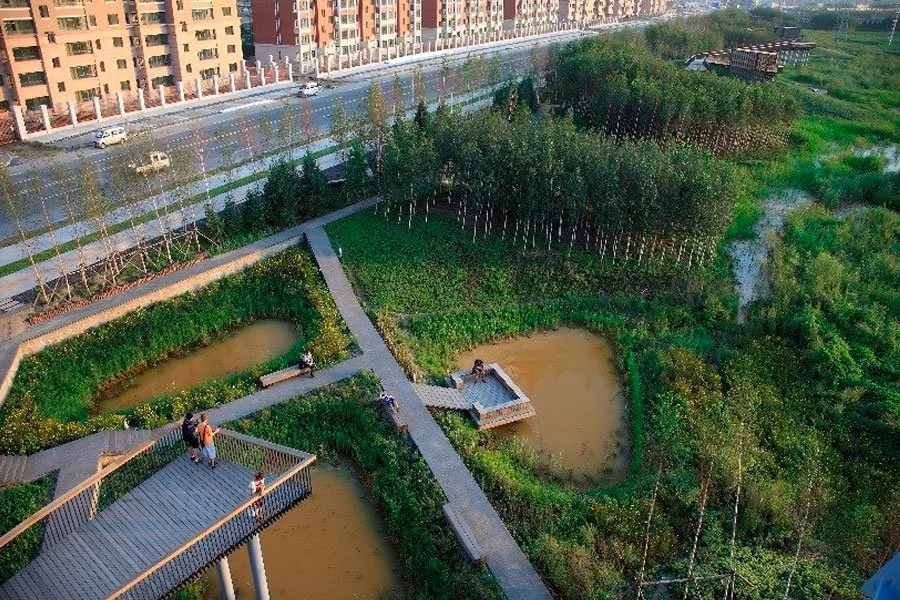
This is where the practical question becomes unavoidable: does it actually work that way? Can building-by-building retention meaningfully reduce flooding in a dense, rapidly urbanizing environment, without the coordination that made Rotterdam's model effective?
The research suggests yes — but with an important qualification. Studies modeling green infrastructure in tropical urban catchments similar to Bali's conditions found that permeable pavements, at full implementation across a catchment, can reduce runoff volume by up to 82 percent and attenuate peak flow by 88 percent under moderate storm conditions. Green roofs in comparable tropical settings achieve roughly 48 to 55 percent runoff reduction. Bioretention cells, when combined with permeable surfaces and infiltration gardens, produce a compounding effect that consistently outperforms any single intervention alone. A Tokyo simulation found that converting just 10 percent of an urban catchment's road surface to permeable pavement reduced total flood volume by 98 percent — not because permeable pavement is a miracle material, but because slowing and absorbing even a fraction of the peak flow at the source prevents the cascading overload of downstream drainage.
The qualification is real and worth stating honestly: these interventions are most effective for moderate, frequent rainfall events. For an extreme event — 385 millimetres in a single day — no building-scale intervention alone prevents flooding entirely. What distributed retention does is reduce the severity and duration of flood peaks, lower the baseline risk across the catchment, and recharge the groundwater that Bali is simultaneously draining from below. The polka dot infrastructure does not replace coordinated drainage investment. It buys time, reduces damage, and begins restoring a hydrological balance that decades of sealed construction have been quietly destroying.
The math compounds in the other direction too. Every new sealed surface added to the catchment increases flood risk for every existing building around it. Every villa built without retention adds its rainfall to the street. The individual decisions are invisible; the collective result is the brown water rising up throughout Kerobokan.
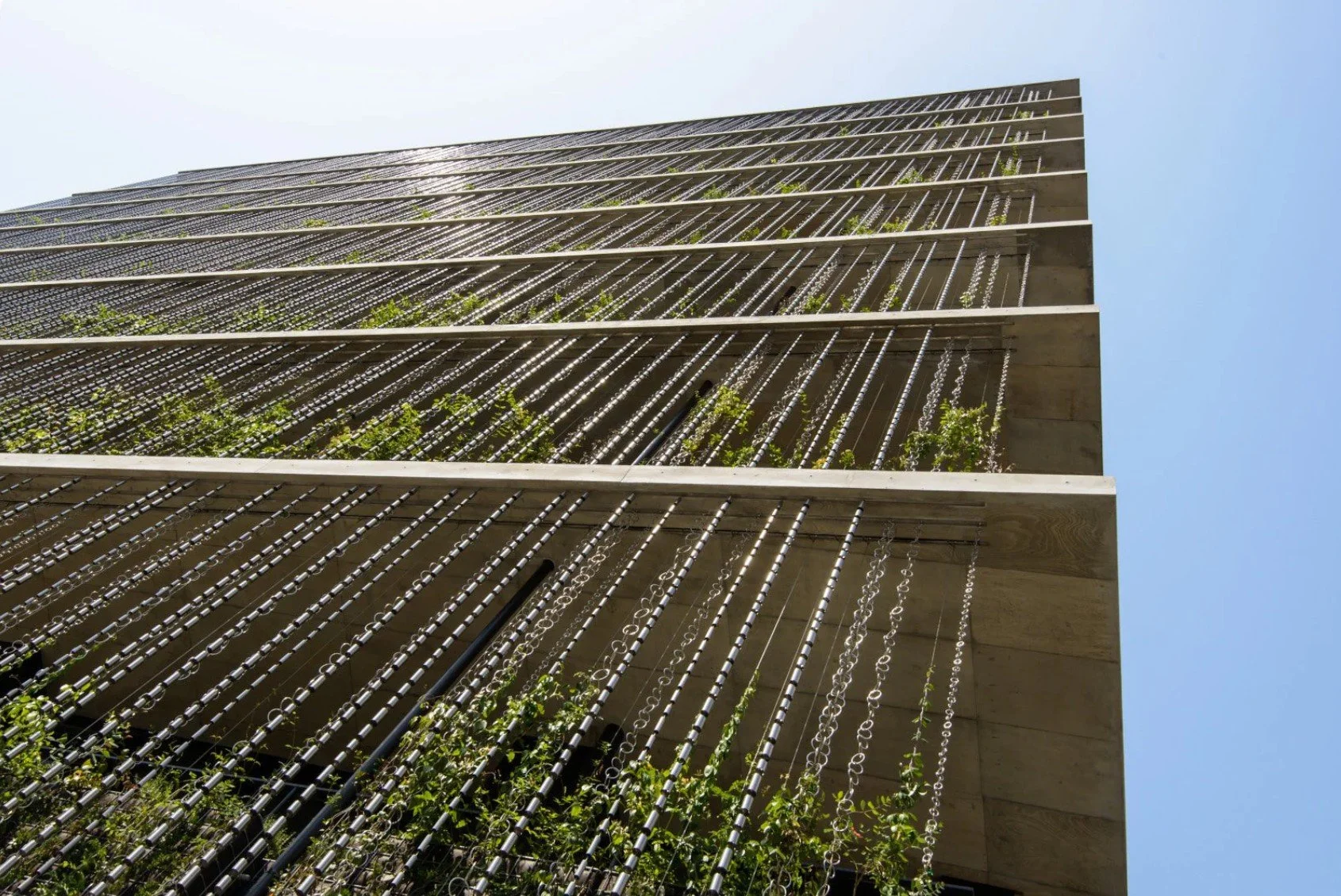
Rainchains offer a visual representation of guided water management
Designing With Water
What does this mean in practice, at the building scale?
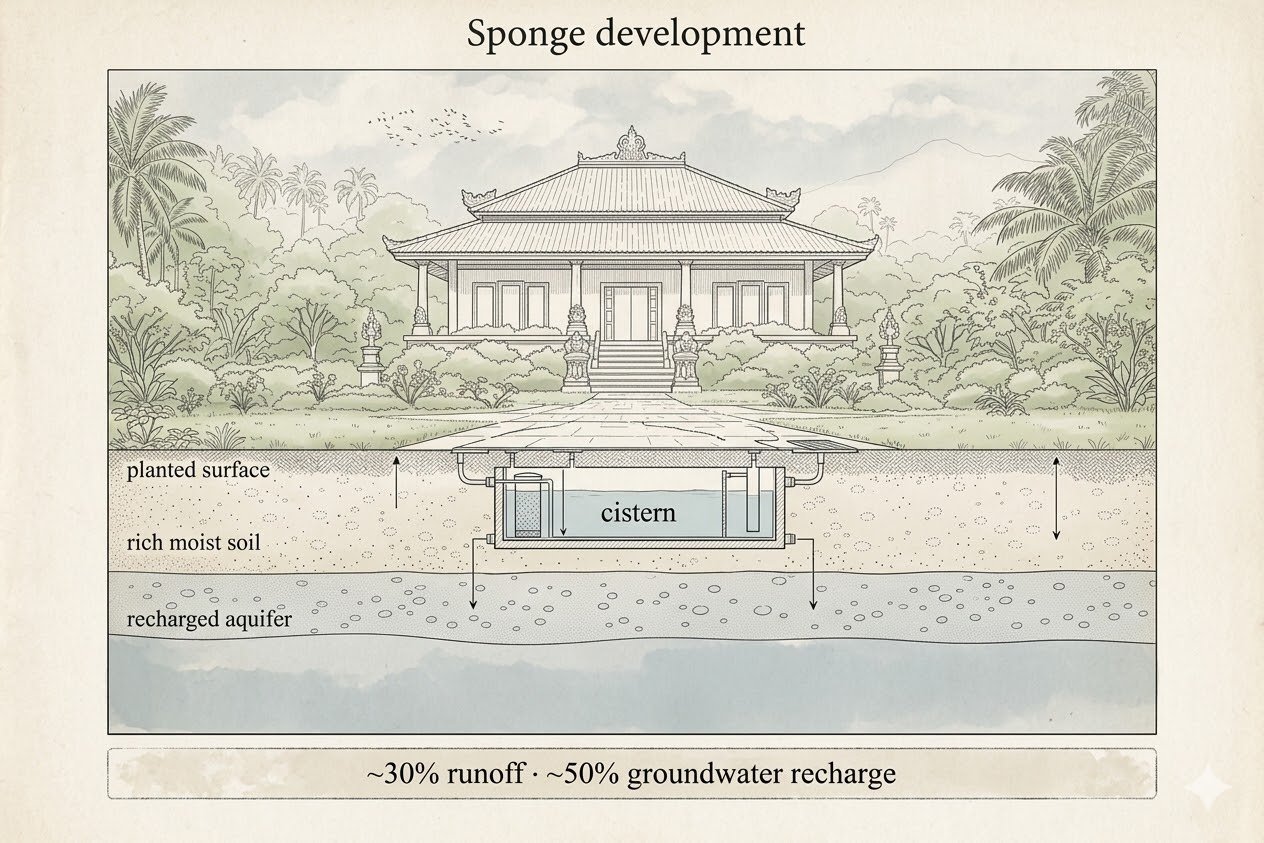
Rooftops are the starting point. A standard villa roof in Canggu — say 200 square metres — receiving 385 millimetres of rain in a day generates approximately 77,000 litres of runoff. A correctly sized cistern capturing that volume eliminates the roof's contribution to street flooding entirely during the storm, and provides roughly two months of irrigation water during the dry season. The cistern does not need to be hidden. Integrated into a terrace, expressed in a building's massing, it can become part of the architectural language rather than an afterthought buried under the garden.
Courtyards — already the spatial heart of traditional Balinese compounds — are the second move. A conventional sealed courtyard sheds nearly all the rainfall that hits it within minutes. An infiltration garden, planted and layered with gravel and porous substrate, absorbs that same water slowly over hours, returning it to the soil rather than the drain. The planting required is not exotic: deep-rooted tropical species, the kind that once covered the slopes above Canggu before they became parking areas.
Permeable surfaces replace sealed ones wherever vehicles are not the primary use. For pedestrian courtyards, garden paths, and villa grounds, the case for permeable material is now unambiguous on both hydrological and groundwater recharge grounds. For larger sites — hotel compounds, resorts, commercial developments — terraced landscapes can function like miniature rice fields, holding water at each level before releasing it gradually downhill. The geometry is different but the principle is identical to what the Subak encoded at landscape scale.
Each of these interventions is modest on its own. Compounded across a neighborhood they change the hydrology of the catchment. Singapore understood this and now mandates stormwater retention as a condition of development approval. Tokyo does the same. So do most Australian cities. The specific policy failure in Bali is not hard to name: there is no stormwater retention requirement attached to building permits. Every development approval currently issued in Canggu asks the building to do nothing about the water that falls on it.
Learning to Hold the Rain
Traditional Balinese buildings did not wait for regulation. Deep overhangs shed heavy rain away from walls and courtyards. Open pavilions allowed air and water to move freely through a compound. Stepped temple bases negotiated the relationship between built structure and saturated earth. These were not aesthetic decisions. They were the accumulated environmental intelligence of a civilization that understood, practically and philosophically, that a building is not a sealed object. It is a participant in a shared system. The water that falls on your roof will end up somewhere. The question is whether you decided where, or left that decision to the street.
The Subak did not survive for a thousand years because Balinese farmers were more enlightened than other people. It survived because the water temples made the consequences of individual decisions visible to the collective, and gave the collective a place to respond. That institution no longer exists in the form that governed the rice fields. What replaced it — the building permit, the development approval, the planning code — does not currently ask the same question. It does not ask where your water goes.
Until it does, that question falls to architects. Not as a constraint to be minimized but as a design problem worth solving — one that connects every building on a flooded street to every other building on that street, whether the owners have met or not.
The rice terraces were a statement about how a civilization chose to organize itself in relation to the natural world. Not in opposition to it. In careful, deliberate, institutionally structured negotiation with it. The terraces are going. The water temples are quieter than they were. What negotiates with the water now is architecture — or nothing.
Learning, again, to hold the rain.