Pelataran pererenan
Pererenan, Bali, Indonesia
2026
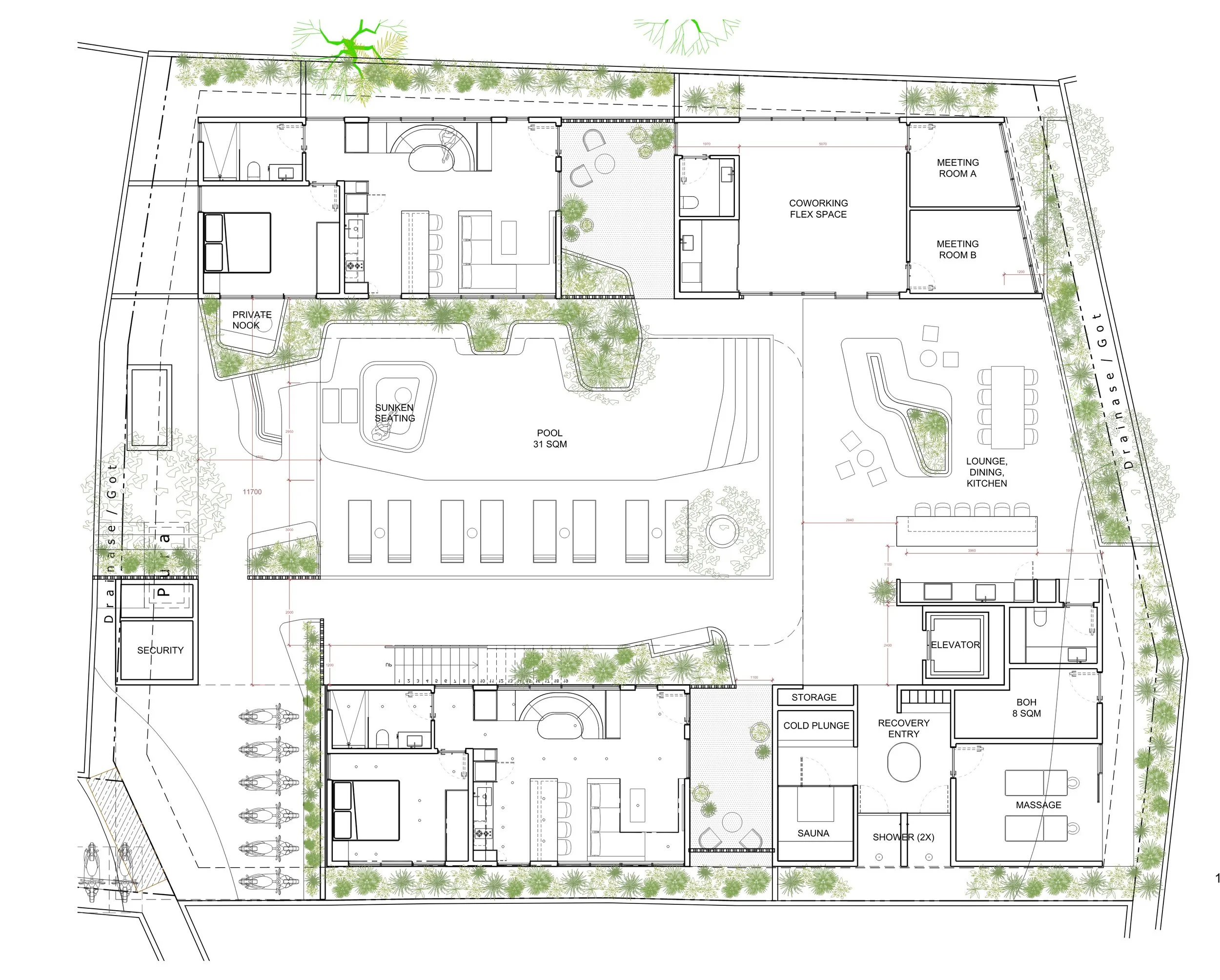
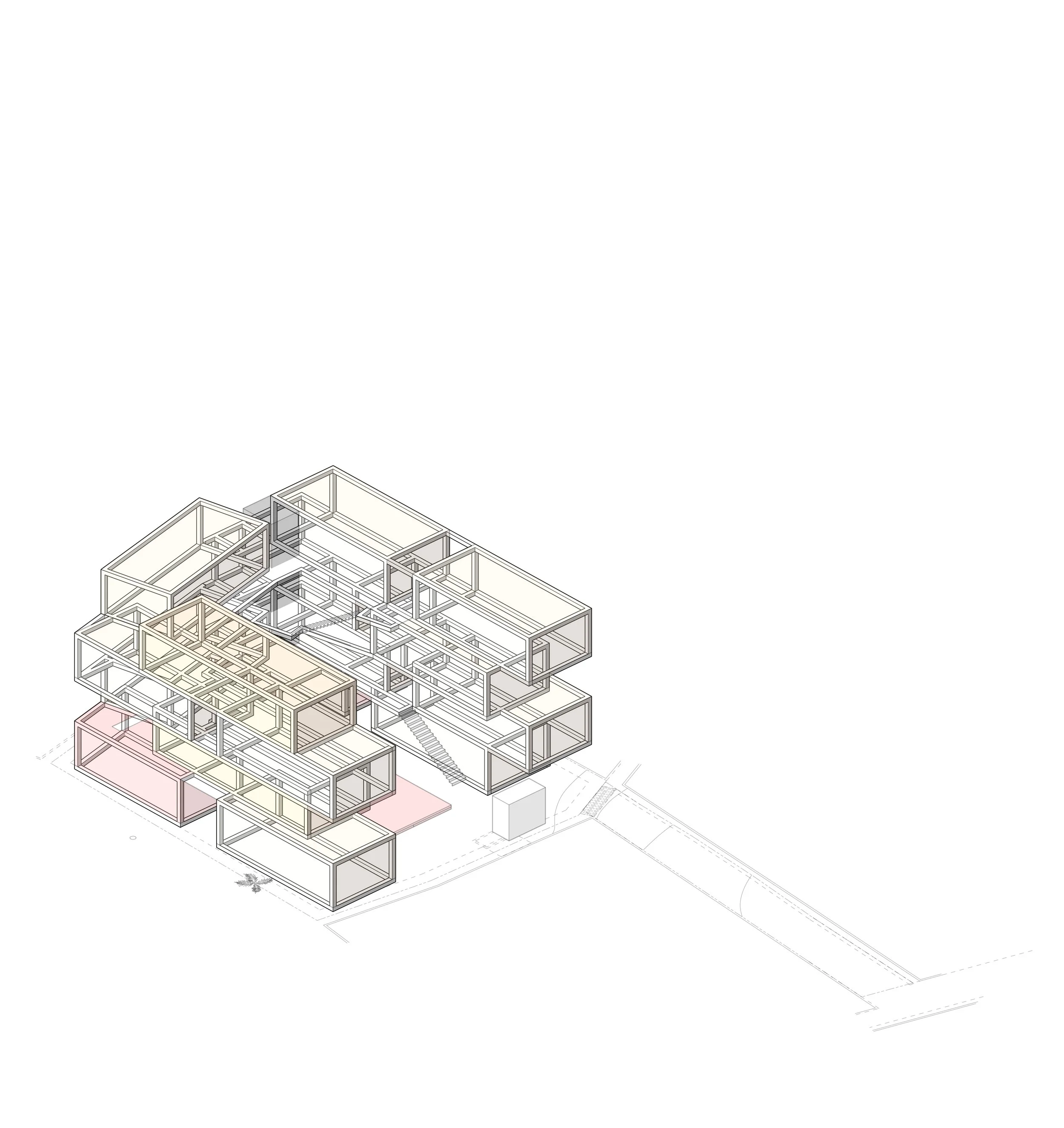
Pelataran Pererenan is a hospitality-led residential concept for a compact urban site in central Pererenan, Bali. The project combines private one- and two-bedroom residences with coworking, communal dining, pool, recovery wellness, yoga, landscape, and back-of-house functions, creating a small-scale residential hospitality environment rather than a conventional apartment development.
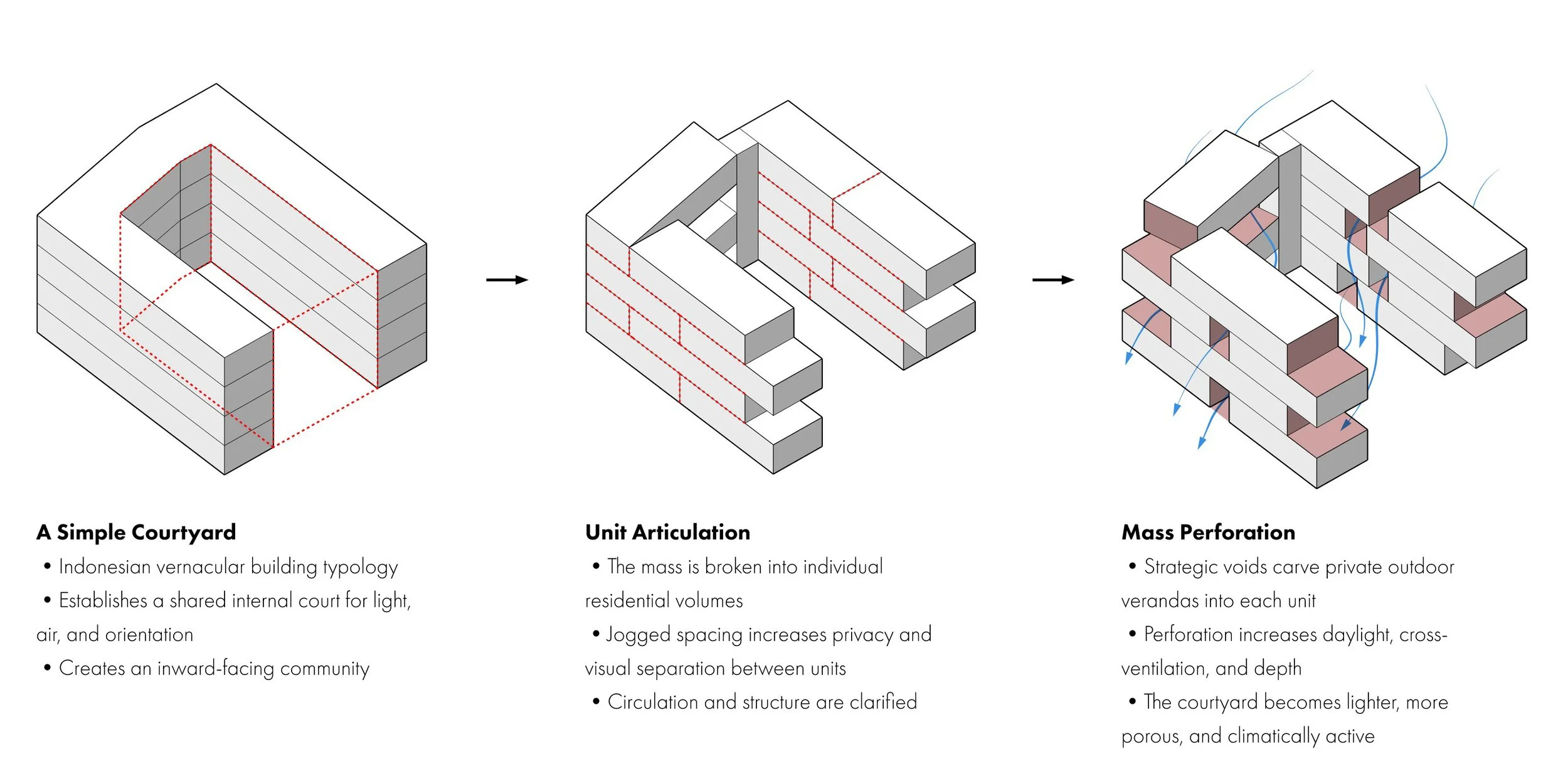
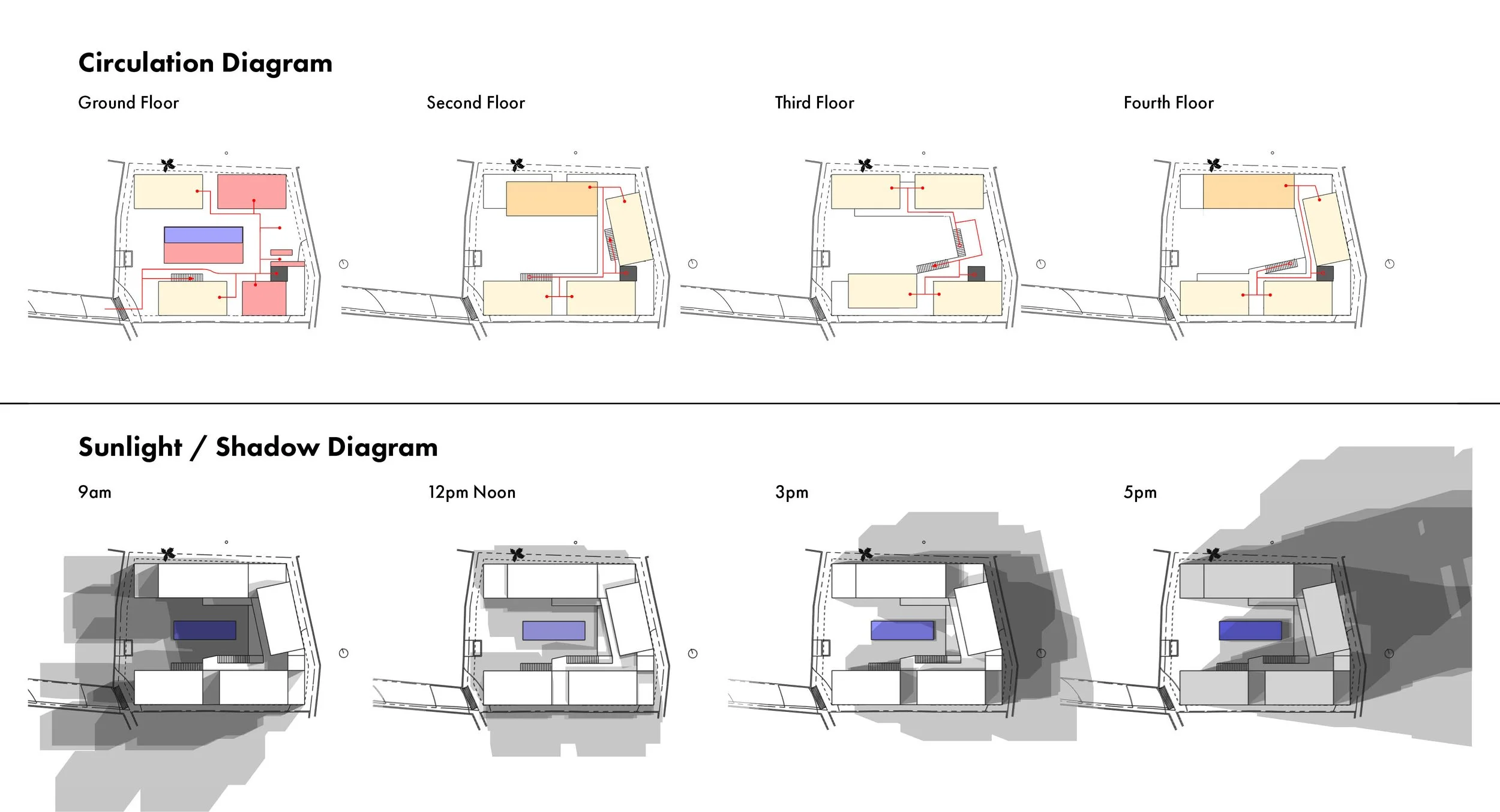
Organized around an inward-facing tropical courtyard, the project explores how long-stay living, digital nomad culture, wellness programming, and climate-responsive architecture can form a compact community model. The courtyard acts as both social and climatic infrastructure, bringing light, air, shade, planting, water, and shared circulation into the center of the site while creating a strong sense of orientation and collective identity.
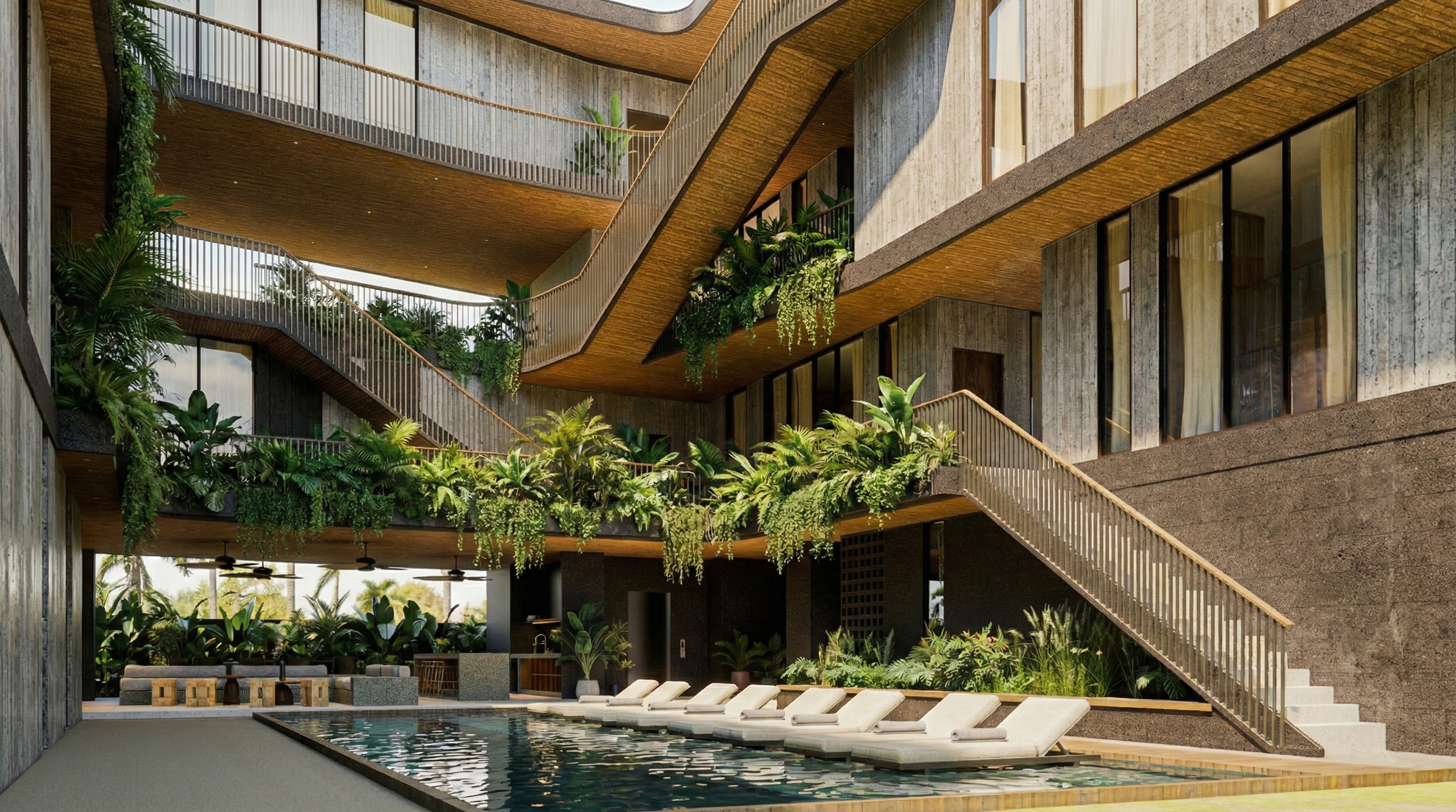
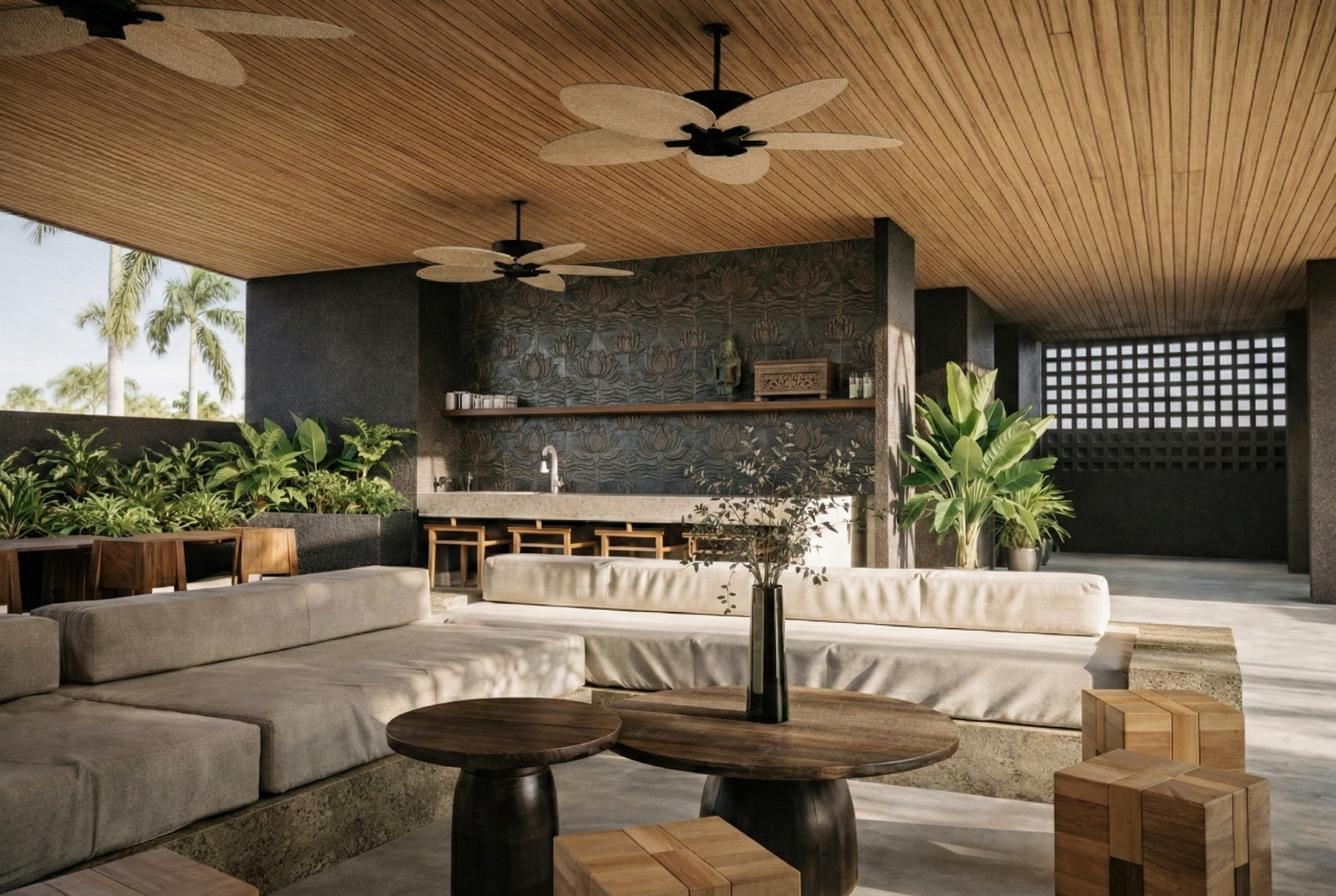
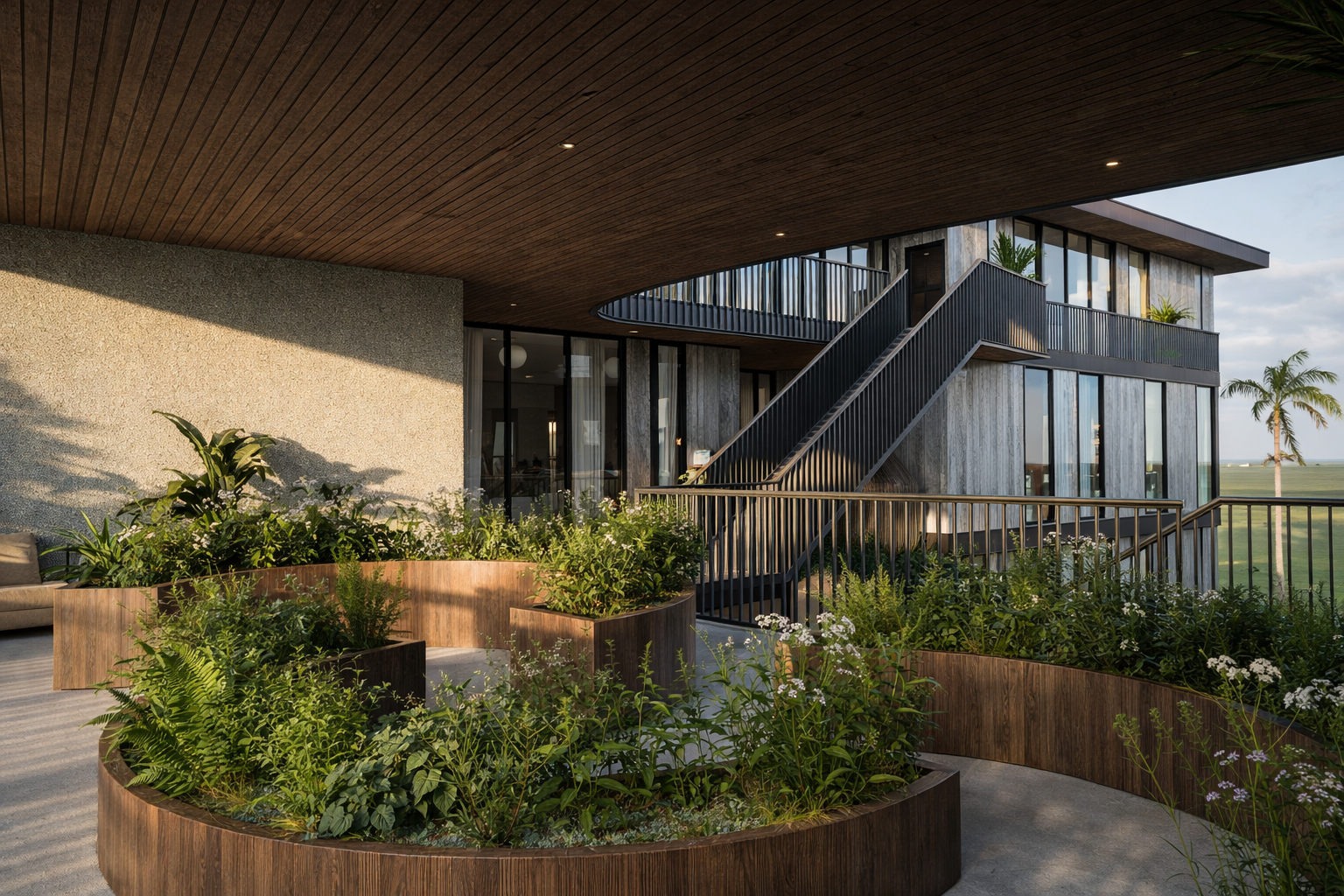
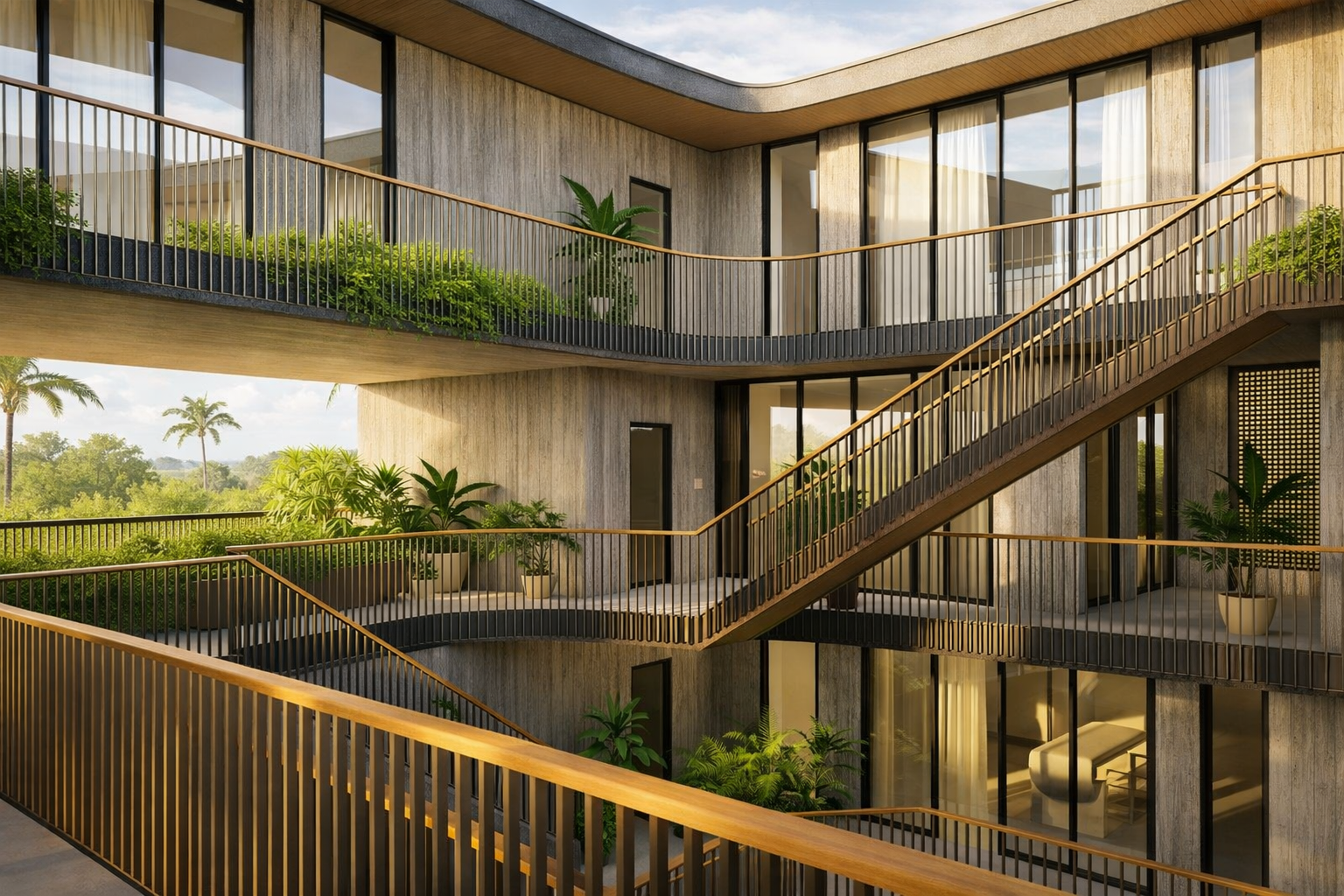
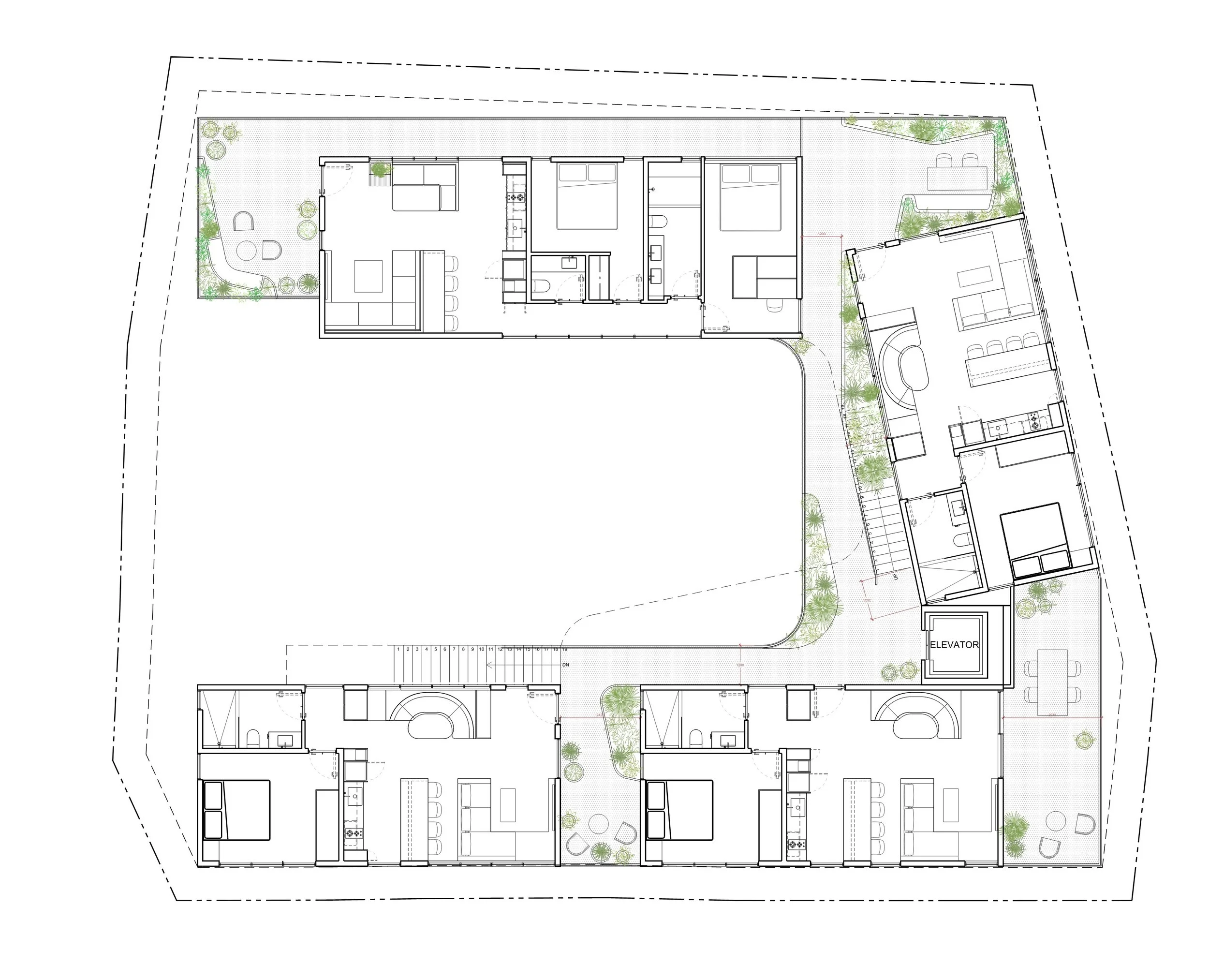
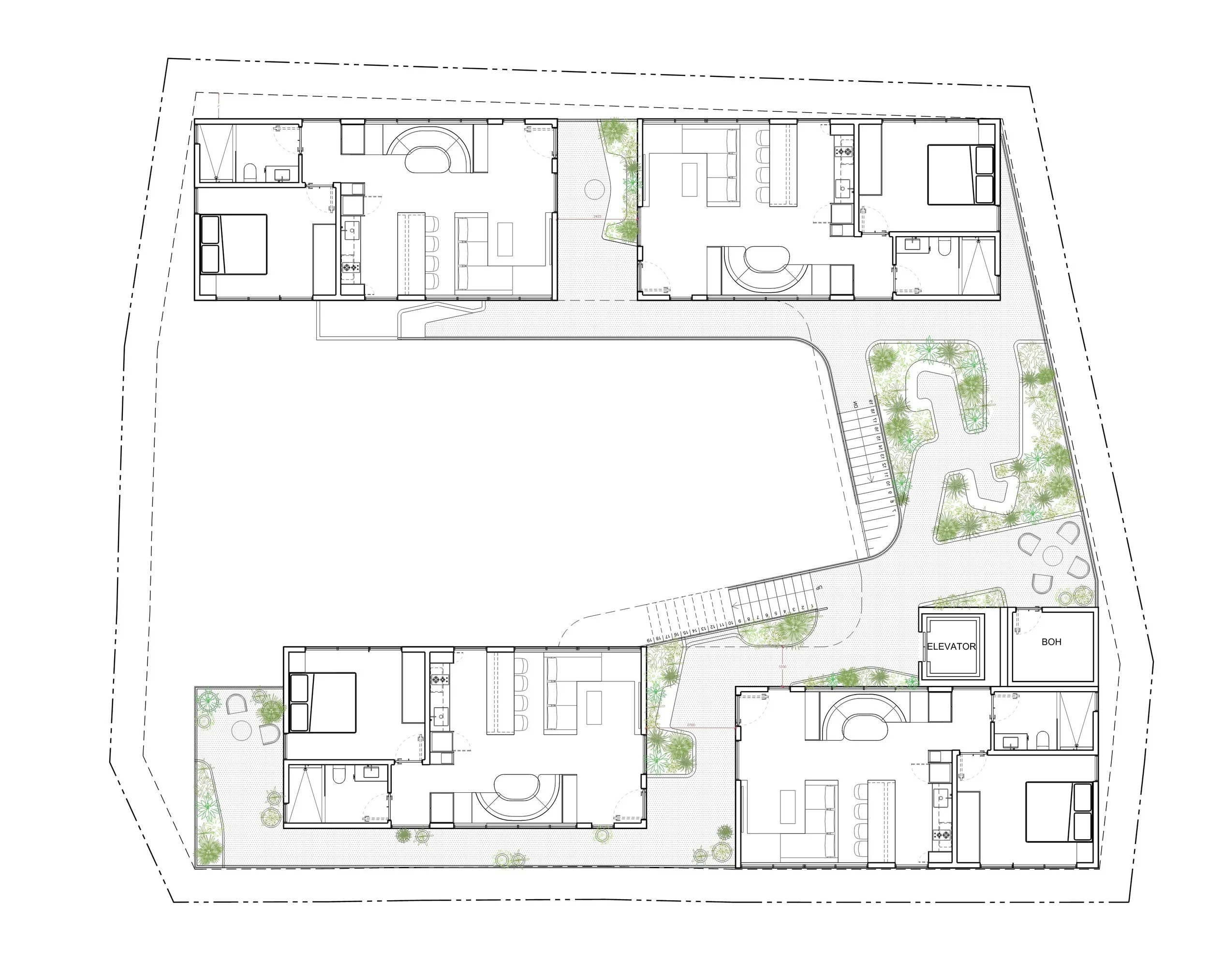
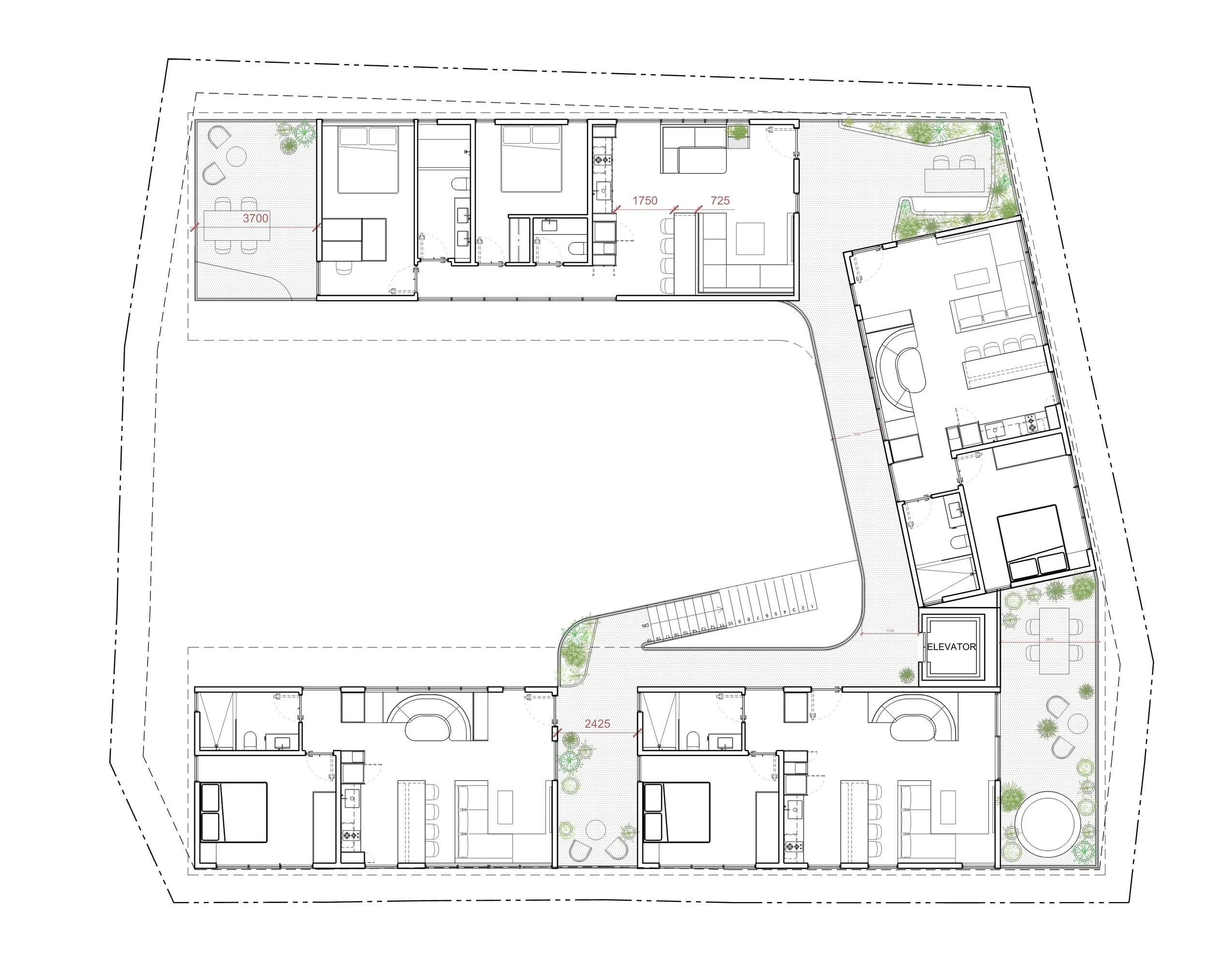
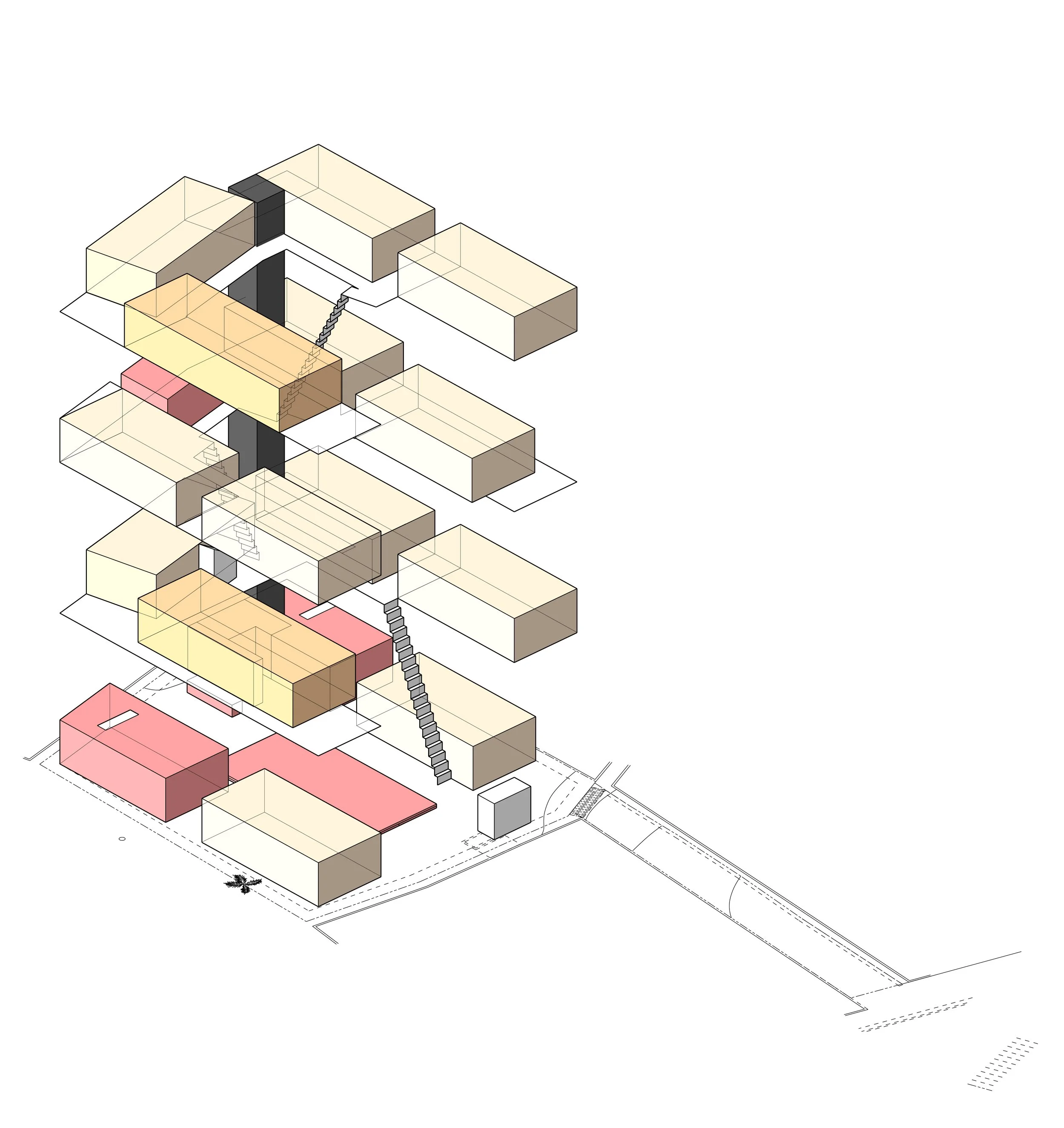
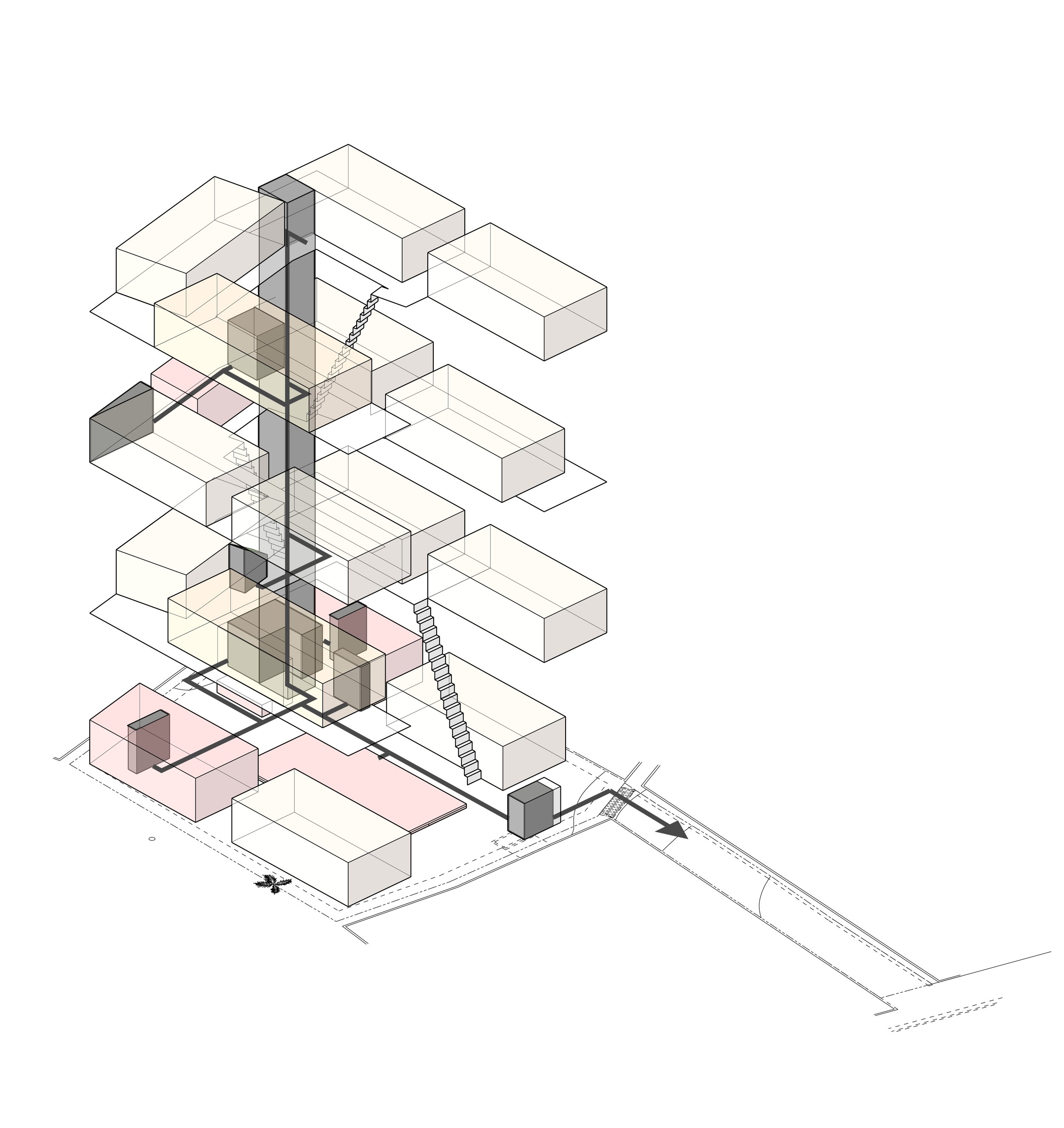
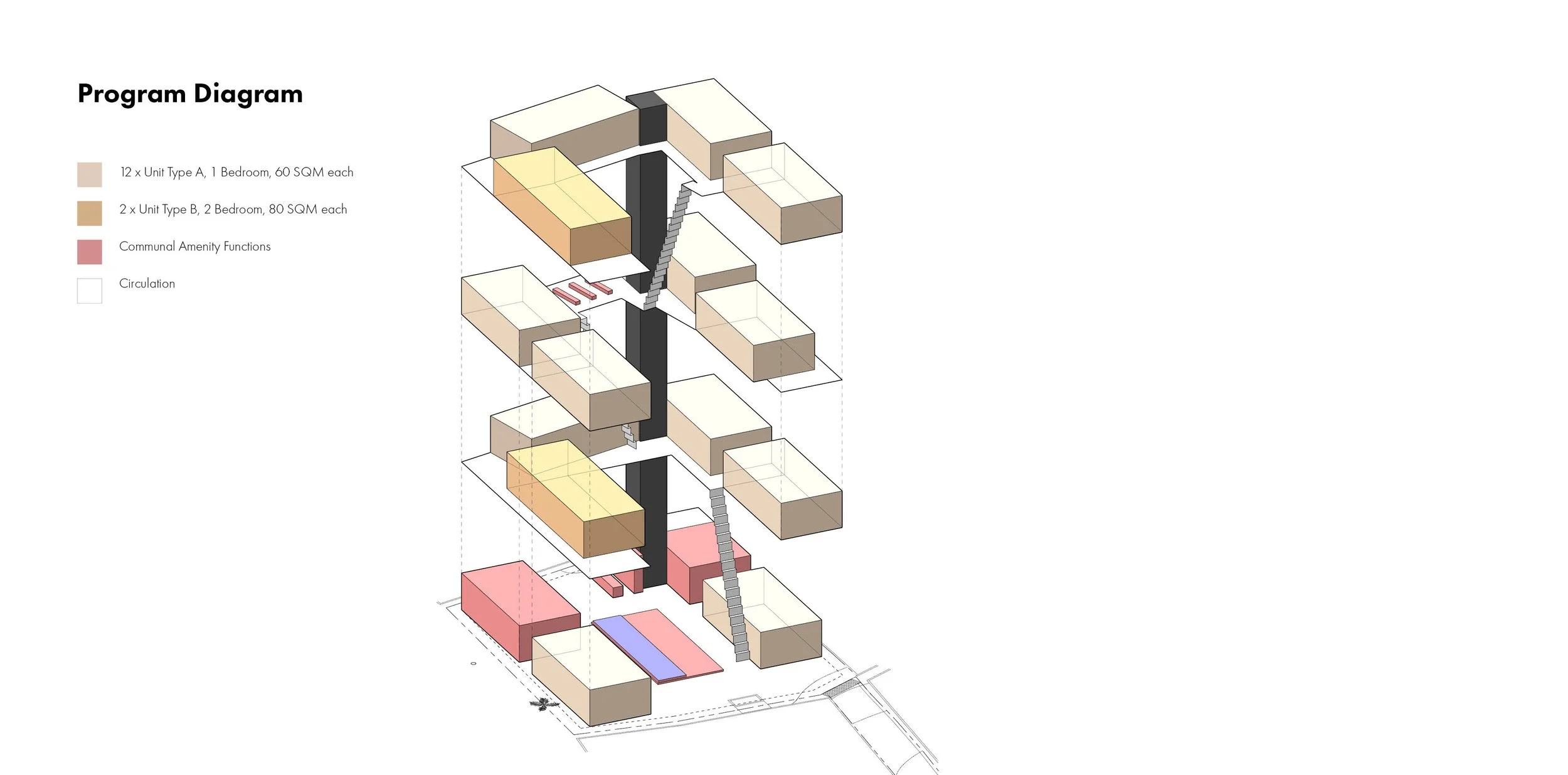
The ground floor is conceived as a transparent hospitality base, integrating lounge, dining, coworking, wellness recovery, pool, garden, arrival, parking, and service areas. Above, the residential levels are organized through open-air circulation, planted thresholds, private verandas, and layered privacy gradients. This creates a transition from public arrival to shared courtyard life, then to quieter residential retreat.
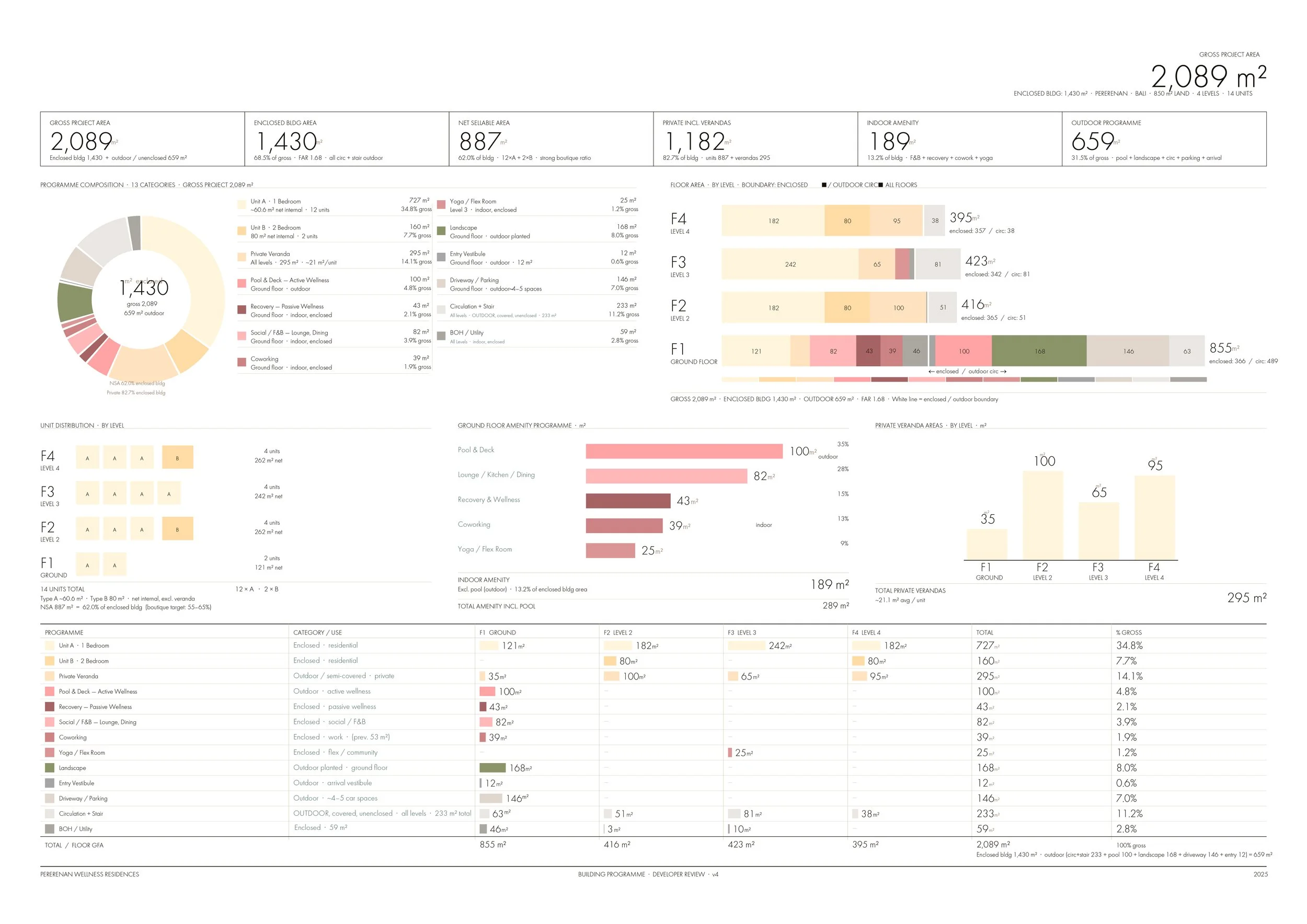
Lane House Studio led the early-stage design direction, feasibility strategy, unit mix development, hospitality programming, guest experience planning, massing studies, service logic, and development positioning. The final programme includes 14 residences, 189 sqm of indoor amenity, 100 sqm of pool and deck, 295 sqm of private verandas, 168 sqm of landscape, and 59 sqm of BOH / utility space.
Design Strategy
The project uses a clear residential grid softened by landscape, shaded circulation, and open-air communal space. Private residences are elevated above a shared ground floor, where lounge, dining, coworking, recovery wellness, pool, and garden areas create a hospitality-oriented base for daily life.
Amenities are not treated as secondary features. They are the organizing framework of the project, supporting a lifestyle-driven residential model for long-stay guests, remote workers, wellness-oriented residents, and contemporary tropical living.
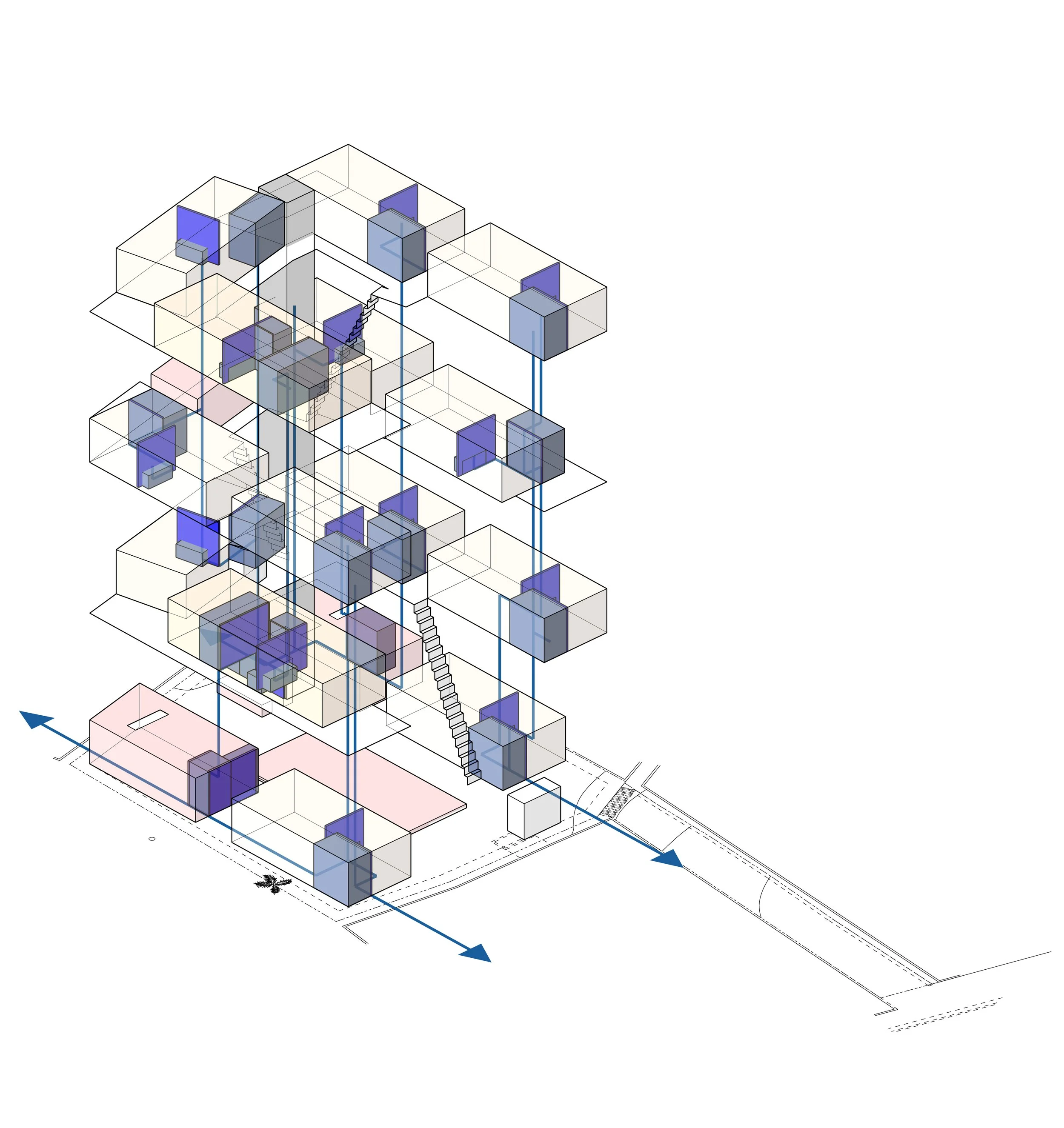
The architectural language balances solidity and permeability. Heavier walls, textured surfaces, and structural rhythm give the building a sense of permanence, while verandas, open corridors, planting, water, and shaded thresholds keep the project porous, social, and climate-responsive. The result is a compact tropical community shaped by courtyard living, operational clarity, and hospitality-oriented development thinking.